Category: Blog Post

  • COVID-19 and The Cost of Construction

    COVID-19 and The Cost of Construction

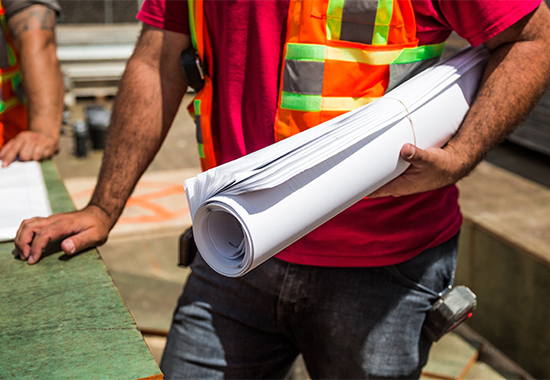
    When stay-at-home orders rolled out in March, it was natural for our clients to ask, “Should we move ahead with construction, or postpone?”

    The answer has two parts. The first part of the answer has to do with impact the pandemic is having on giving, fundraising, and lending. Blueline will tackle this in a future post. The second part of the answer has to do with pressures that the pandemic is putting on construction costs.

    Blueline asked seven contractors from around the country with whom we work three questions:

    1. What materials are likely to increase in cost over the next 12 months?
    2. How is disruption to supply chains affecting cost and lead-time of products?
    3. How are efforts to maintain worker safety and health affecting construction schedulesand general condition costs?

    Key factors affecting cost of materials are the country of origin and disruptions to manufacturing. There was already price increases due to tariffs. David Lawrence of Forrester Construction in Rockville, MD cites materials coming from China and Italy, such as steel, light fixtures, glass, door hardware and stone as likely having near-term price increases due to shutdowns in those countries. Jeremy Stovall of Brookstone in Houston TX says that even pre-COVID 19 their company was planning on a 6% increase in material costs over the next 12 months. However, all the contractors noted that competitiveness in the labor market will result in downward trends on labor costs. Consensus is that reduced labor costs are likely to offset material costs for the next 6 to 12 months.

    Lumber costs affect the cost of smaller projects more than large projects. Jim Monger of R. S. Monger and Sons says, “The lumber market has been left in a roller coaster of uncertainty.” Lumber pricing – for studs, plywood, OSB and trusses – has been volatile but is expected to stabilize later in 2020. Lumber mills and truss plants have had to shut down for cleaning and to reconfigure for social distancing of workers, creating recent spikes in costs and delays in getting materials. But Jim Herr of Herr and Company in Harrisonburg, VA says he doubts we will see the significant inflation in material costs builders experienced in 2010.

    Supply chain disruption is impacting project schedules. Derek DeGroot of Aspen Group in Frankfurt, IL, says, “Material shortages and shipping delays are the ‘new normal’.” Derek also points out that collaboration between design and construction team members can facilitate early release of shop drawings and the ability to choose materials based on availability, thereby offsetting potential impacts on cost. Delays due to supply chain disruption are not just from foreign countries, John Scott of Scott Long Construction in Chantilly, VA, indicates with different rules in different states and challenges faced by truckers, his team pays attention to where the manufacturer or wholesaler is located in the U.S.

    Worker safety is paramount for every contractor we contacted. Larger projects have advantages when the goal is to space out workers on a jobsite. Scott Whelchel of Edifice Construction in Charlotte, NC says that they are being proactive with proper PPE for workers and keeping jobsites clean. When there are delays for cleaning, they make every effort to make up lost time. For one contractor, getting the crew not to sit together at lunch has been a unique challenge. John Scott says they are seeing increased productivity because workers are getting to work on time and staying later, both to get their work done and to avoid other trades and workers.

    “As we learn the ‘new normal,’ productivity will increase as it always does when our industry strives to build faster, more cost-effectively, and SAFER.”

    Brookstone Construction

    While in the short term it is taking time to learn new habits, contractors always have incentives to find ways to do things safely and efficiently. This means that long term, owners will not likely bear the cost of new safety measures.

    In conclusion, the pandemic will not likely drive up material and labor costs. Projects may take longer, which means extended general conditions and, perhaps, some related additional cost. It appears however that most go/no-go decisions for churches will be driving by availability of funding. More on that in our next post.

    As always, if there is question you would like us to research and address, please let us know. The following contractors and suppliers were generous with their insights. There was more wisdom they shared than we could include in this article. We encourage you to contact them directly with questions:

    Aspen Group, Frankfurt, Illinois
    Brookstone Construction, Houston, Texas
    Edifice Construction, Charlotte, NC
    Forrester Construction, Rockville, MD
    Herr and Company, Harrisonburg, VA
    R.S. Monger and Son, Harrisonburg, VA
    Scott Long Construction, Chantilly, VA
  • Children’s Ministries in a Post-Virus World

    Children’s Ministries in a Post-Virus World

    We all know that the world we are emerging into will be different than the one we took shelter from. Fist bumps, or even elbow bumps, will replace handshakes. Glass shields protect us from everyday transactions, be it the post office or the farmer’s market. We may never feel secure enough in our stock of hand sanitizer ever again.

    Yet while “those that know” work endlessly to get us back to what used to be normal, no one really knows the forecast for the future. This seems to be especially true for our children, particularly in regard to education, daycare services and worship services. Certainly, we feel the need to know and understand the impact to our grown-up world before we can make decisions regarding those who depend upon us.

    I’m sure many of us with young children might have felt a slight reprieve in the beginning of this pandemic, as we were given permission to attend services in our jammies with our coffee and children. If the kids got too antsy, we could send them to their rooms rather than try to sweetly hiss reprimands under our breaths. But we’re now eight weeks in and I know we are longing to see our church family (and pass those darling little suckers over to another loving adult!). So, how is this going to go down?

    Of course, no one knows for certain how this will all play out with information changing daily, if not hourly. But it’s probably safe to say that many procedures we see put in place as part of Phase One will carry through to our childcare facilities, with even stricter precautionary measures than what we’re normally used to. Fortunately, most churches these days have existing security measures to protect our children, and many of those procedures follow recommendations for unwanted viral predators as well. Computerized check-ins and single flow circulation paths (one way in and one way out) have been typical practice for a while now. However, we may now expect our children are met at the Children’s Wing entry with a thermometer and a “Thank you we got it from here”.

    Once our little ones are safely in the protection of the kids’ area, what happens then? We will likely follow the guidelines that are developed by the educational system. Many ideas and speculation have been tossed out and it’s hard to know what will stick, but we are probably best to prepare our children for the same cautions that will be required in schools or the general public. Less furniture, less surfaces to touch, and larger spaces for fewer bodies are all easily achieved practical implementations. The success lies in the integration of these new procedures to become normal in the environment. Consider visual cues as a means to socially distance in groups, such as carpeting with a pattern that repeats at six feet intervals. This feels much more natural as part of the environment than carpet tiles overlaid on flooring and could even serve as a cue to indicate where to sit. Having hand sanitizing stations placed throughout the room next to any shared materials will encourage the rote practice of hand-cleaning.

    Ultimately, however, children are going to be children and our biggest challenge will be to continue to nourish their spirits despite the physical barriers imposed. Children are blessed with resilience and most likely will be our teachers in integrating into a post-pandemic world.

  • Reopening Your Church: A Guide to Resources

    Reopening Your Church: A Guide to Resources

    During Blueline’s recent webinar on church operations, we were asked what guidelines existed to help churches reopen. Here is a summary of what we have found so far.

    When to Reopen?

    In Facebook Live events hosted by Vanderbloemen (a Christian Executive Search Firm), pastors around the country talk about syncing their plans for reopening church facilities and meeting with the guidelines of local and state government.

    Your city, county and or state likely have published guidelines and timelines. Some state guidelines are very general and open-ended, some will reopen in stages and some states are already open. Try searching: “[your state name] reopens” to find out what your state is doing.

    Planning for reopening begins with asking, “Why?” The Gospel Coalition urges you to consider your motive for reopening and be mindful that not everyone in your church will react the same way to reopening.

    Pastor Lillian Daniels of 1st Congregational Church in Dubuque, IA urges churches to avoid a preoccupation with just getting back to the way we were but to see that the crisis is “teaching us new ways to be the church.”

    How to Reopen?

    A common first step is to start with small gatherings of 10 or fewer persons. This may be regular community groups or Sunday School classes meeting in homes, back yards or in smaller rooms in your church. The typical next stage is groups of 100 people at a time – possibly distributing attendees among different rooms within the church and using technology for attendees to share worship and preaching.

    However churches ramp up meeting, they will need to observe social distancing. Asking people and family groups sit to six feet apart will generally be easier for smaller churches or those who have existing capacity. It may mean going to multiple services.

    Here is a summary of what we have found. Ken Braddy’s blog is one of the most referenced blogs on this topic. I have repeated many of his suggestions.

    • For churches with multiples services and/ or limited capacity, attendees may be asked to sign up for a service using apps such as Eventbrite.
    • Changing the format of the service, including possibly shortening the service to allow for multiple services per day, is a common tactic.
    • In warmer areas, worshipping together while observing social distancing will be easier with outdoor services.
    • Separate entrances and exits if possible. Try to create one-way traffic flows.
    • Prop open doors or have gloved ushers open doors so people do not have to touch door handles. There is door hardware that allows you to use your foot to open a door.
    • Set up numerous hand sanitizer stations.
    • Ask people not to shake hands or embrace.
    • Encourage people to wear masks.
    • Create special accommodations for at-risk persons.
    • Deep-clean and sanitize your building before reopening. Check out this checklist by Smart Church Solutions. Tim Cool and his team are the best there is when it comes to facility maintenance.
    • Celebrate Communion with pre-packaged elements. However, a quick web search revealed most sources are out of stock.
    • Many churches are waiting until later stages to re-start Children’s Ministries. When you do, follow CDC guidelines for daycare.
    • Avoid passing the offering plate. Some churches plan to install giving boxes. Others are encouraging people to give by mail. Some churches already have on-line giving. It is interesting to note that churches that already have on-line giving are experiencing less drop-off in giving than those that do not have online giving. In some cases, churches with online giving are experiencing an increase in giving during this time.
    • If your church uses hymnbooks, now might be the time consider investing in projection equipment. Screens aren’t just for contemporary worship anymore!.

    Conclusion – God is at Work.

    As we talk to clients and monitor social media, we hear amazing stories of blessing, abundance and grace. Church of the Highlands in Alabama offered drive-through testing early in the crisis. One church in Atlanta is giving away Chromebooks to overcome the inequities of access to technology for learning. Another church converted their weekly meals for their city’s homeless to take-away. Many churches that already had an on-line presence are experiencing engagement up to five times what they had pre-COVID 19. As one of our clients said, “Anonymity is a great boost to church attendance.

    When and how you re-open has many practical and logistical considerations. More importantly, though, it is an act of listening for and recognizing God’s leading. More than ever, God is at work.