Category: Blog Post

  • Beyond Preservation: Transforming Silos into Community Hubs

    Beyond Preservation: Transforming Silos into Community Hubs

    By Jack Duran, AIA, Vice President | Regional Director | Published on September 24, 2025


    For generations, the silos around the country have stood as landmarks along the railways, shaping town skylines and reminding communities of their agricultural roots. Once central to a thriving farming economy, these towering silos served as hubs where harvests were dried, stored, and shipped nationwide. Today, even as fields have been replaced by neighborhoods and commerce, the silos remain, silent yet powerful symbols of heritage and continuity.

    LDDBlueline envisions a future where these historic structures are not simply preserved, but reactivated as the centerpiece of a new commercial district.

    Beyond Preservation: Transforming Silos into Community Hubs

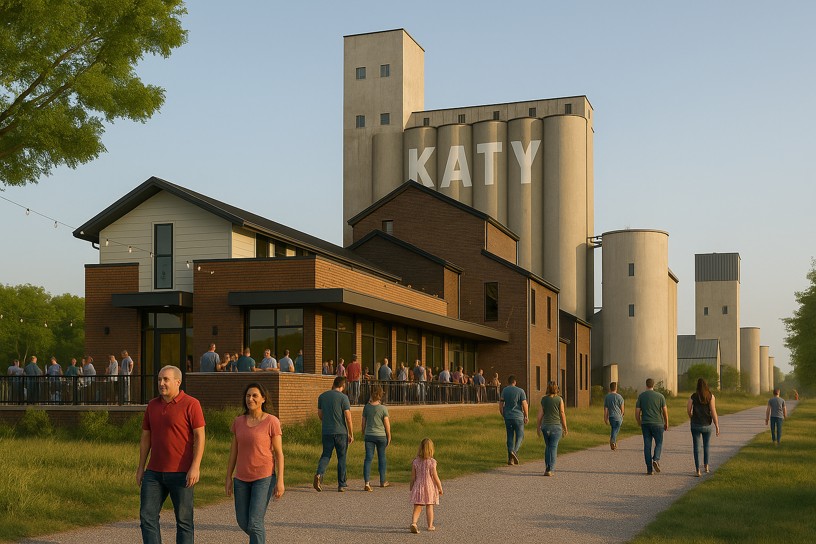
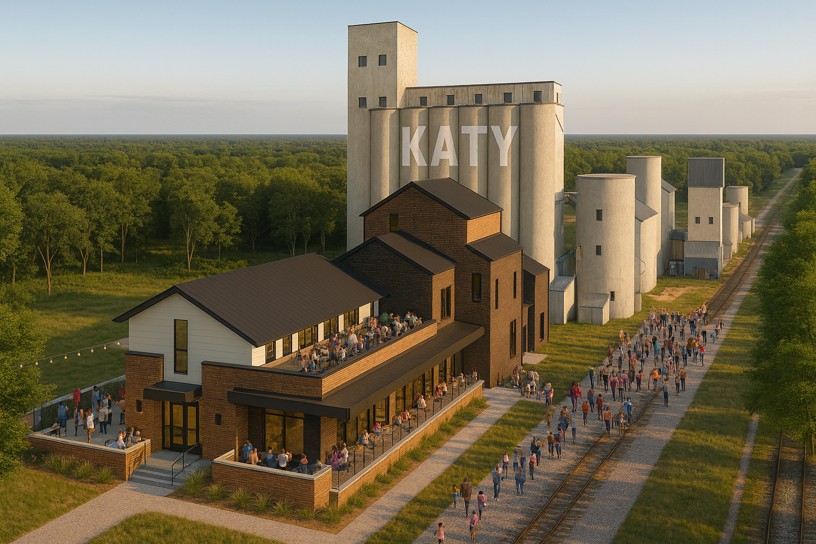
    By boldly inscribing the silos with a community’s name, they remain recognizable landmarks, while surrounding brick and metal buildings echo their industrial character and provide space for shops, restaurants, and public gathering areas.

    Pathways and plazas connect people to the site, creating places for families and visitors to gather. Shaded terraces, lighting, and landscaped walks foster a welcoming environment that recalls the spirit of the harvest season, now celebrated throughout the year.

    Beyond Preservation: Transforming Silos into Community Hubs

    The design balances memory with modern purpose, transforming what was once utilitarian into a civic and cultural hub.

    In doing so, the silos become more than relics, they emerge as active symbols of resilience, structures that once supported farming now supporting community life. LDDBlueline welcomes the opportunity to help communities reimagine their historic icons as vibrant centers of untapped potential.

    Beyond Preservation: Transforming Silos into Community Hubs

  • Innovative Solutions for Budget-Driven Educational School Projects:  Embracing Pre-Engineered Metal Buildings

    Innovative Solutions for Budget-Driven Educational School Projects: Embracing Pre-Engineered Metal Buildings

    By Jack Duran, AIA, Vice President | Regional Director | Published on June 6, 2024

    Innovative Solutions for Budget-Driven Educational School Projects: Embracing Pre-Engineered Metal Buildings

    Private and charter schools often face unique challenges in educational infrastructure, particularly regarding funding. The need for cost-effective solutions without compromising quality or aesthetics is paramount in Texas, where limited or no state funds per student are allocated. In response to this challenge, forward-thinking architecture firms are considering innovative approaches, such as utilizing pre-engineered metal buildings (PEMBs) as structural frames, to deliver exceptional educational facilities within tight budgets.


    Pre-engineered metal buildings have long been recognized for their efficiency, durability, and cost-effectiveness in various construction projects. Traditionally associated with warehouses and industrial facilities, PEMBs have undergone significant advancements in design and technology, making them a viable option for educational buildings.


    Cost-Effectiveness

    One of the primary reasons for choosing PEMBs in budget-driven school projects is their cost-effectiveness. With private and charter schools operating within limited budgets, PEMBs offer significant savings compared to traditional construction methods. The streamlined manufacturing process and ease of assembly reduce construction time and labor costs, translating into overall project savings.


    Structural Integrity and Durability

    Despite their cost-effectiveness, PEMBs do not compromise on structural integrity or durability. Engineered to withstand harsh weather conditions and provide long-term stability, these buildings offer a reliable and resilient solution for educational facilities. This is particularly important for schools in regions prone to extreme weather events, such as hurricanes or tornadoes.


    Flexibility in Design

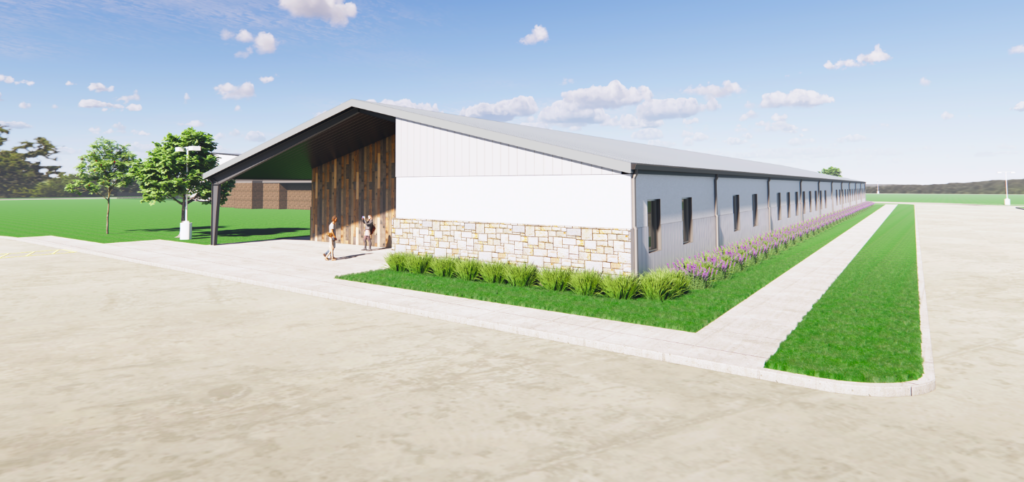
    Contrary to popular misconceptions, choosing a PEMB as a structural frame does not limit design possibilities. Modern PEMB systems offer a high degree of flexibility regarding architectural aesthetics and functional layout. Schools can customize their building envelopes with various exterior finishes, including masonry and stone, to achieve the desired look and feel while staying within budget constraints.


    Sustainable Construction

    In today’s environmentally conscious world, sustainability is a key consideration in construction projects. PEMBs are inherently sustainable, as they are often fabricated from recycled materials and can be easily disassembled and reused if necessary. Additionally, the energy efficiency of metal buildings can contribute to reduced operational costs for educational institutions in the long run.


    Case Study: LDDBlueline’s Approach

    LDDBlueline specializes in designing educational facilities for private and charter schools in Texas. Its focus is on maximizing value without compromising quality. The firm has embraced pre-engineered metal buildings in several projects, recognizing the importance of budget-driven solutions.


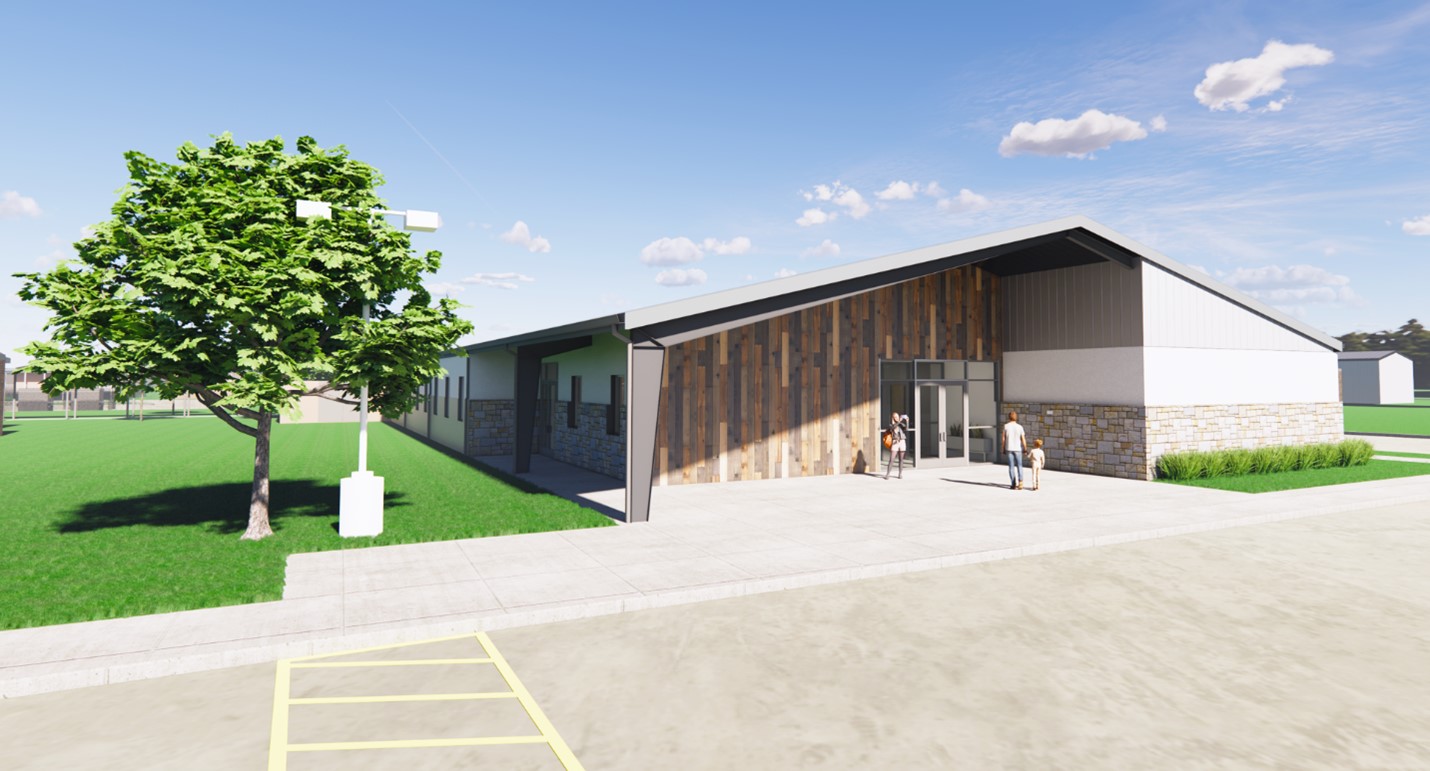
    One notable example is a Charter School, where the firm integrated PEMBs as the structural frame while incorporating high-quality exterior finishes to enhance the building’s aesthetic appeal. By strategically combining cost-effective materials with innovative design solutions, LDDBlueline delivers a new Grade School building that meets the school’s functional requirements while staying within budget constraints.
     

    Innovative Solutions for Budget-Driven Educational School Projects: Embracing Pre-Engineered Metal Buildings

    Conclusion

    In conclusion, using pre-engineered metal buildings as structural frames presents a compelling solution for budget-driven educational school projects, particularly in contexts with limited funding. By leveraging the cost-effectiveness, structural integrity, and design flexibility of PEMBs, architecture firms can deliver high-quality educational facilities that meet the needs of students, educators, and communities alike. With careful planning and innovative design strategies, budget constraints need not limit the creation of inspiring learning environments for the next generation.


  • Unlocking Potential:  Human Resources as the Engine of Organizational Excellence

    Unlocking Potential: Human Resources as the Engine of Organizational Excellence

    By Danielle Coates, PHR, SHRM-CP, Human Resources | Recruiting | Published on May 28, 2024

    My journey into Human Resources began in college through an HR work-study program in the banking industry at a Fortune 500 company. I was fortunate to experience traditional HR and organizational development there, which gave me a well-rounded glimpse into the world of HR. I graduated with a degree in Business Management with a concentration in HR (yes, I am working in my field of study 😊). Throughout my career, I’ve gained extensive HR experience at rapidly growing companies across various industries, including pharmaceutical, banking, real estate/appraisal management, medical equipment, and now most recently HR in the AEC (architecture, engineering and construction) space. I’ve obtained HR-specific certifications (PHR and SHRM-CP), continually striving to enhance my expertise. Along the way, I’ve had numerous mentors who have guided me, reinforcing the importance of HR as a strategic partner in any organization.

    At LDDBlueline our mission is to deliver innovative buildings of lasting value that exceed client expectations. In order to support that mission, it is vital to have personnel policies and practices that ensure that employees are provided the tools they need to grow professionally. For example, licensure and career development is very important at the firm, so we provide support for employees to obtain further education and certifications. Additionally, we have implemented a quarterly review process to replace annual reviews to provide timely feedback and support for professional development. We want our employees to have a clear path to success within the firm.

    At LDDBlueline, our core values are Honor, Integrity, Generosity, and Humility. The culture at our firm can be described as one of creativity, collaboration, and commitment to excellence. In order to drive that culture, we employ several strategies to attract, develop, and retain top talent, and we must constantly re-evaluate these strategies in an ever-changing employment environment.  We have several professional development initiatives underway, including a mentor and internship program, which follows our organization’s commitment to excellence. Additionally, all employees fill out a weekly reporting system to highlight comments, tasks and concerns from employees that is shared with our leadership team. 

    LDDBlueline’s mission, values, and culture should drive every decision we make, including influencing HR practices.  As the HR and Recruiting leader, I am a strategic partner working with both employees and leaders to help ensure we are all headed in the same direction. I oversee the execution of HR processes, policies and procedures, strategies, programs, and operations. I work closely with all stakeholders to ensure our HR and Recruiting practices align with our business goals. At LDDBlueline, we believe in doing what we say and saying what we do, ensuring transparency and trust within our team. 

    Lastly, we are hiring!! If you are interested in learning more about career opportunities, please send your resume to careers@i-hate-architects.wr.ardent.dev

  • Architecture in the A.I. Apocalypse

    Architecture in the A.I. Apocalypse

    By Ian Elmore, Designer | Published on March 1, 2023

    “The purest and most thoughtful minds are those which love color the most.” – John Ruskin

    The past few months have seen exciting developments in the field of Artificial Intelligence (A.I.), also called Machine Learning.  Text-to-image A.I. like Stable Diffusion and Midjourney are causing a panic in the art world.  OpenAI’s ChatGPT is already causing shifts in copywriting, and software development. On the other hand attempts to bring an AI lawyer to court have floundered.  Universities have become an arm race between A.I.-authored term papers, and AI that detect A.I.-written term papers.  Headlines about a coming digital “apocalypse” stress the real threats that this technology can create.   It seems like every industry is talking of disruption as big as the advent of the internet, and the real implications of this technology aren’t clear yet.

    In my own explorations of this technology, I was shocked at how quickly these programs could create a personal portrait in the style of Van Gogh or rewrite a car manual in iambic pentameter.  Soon however, the limits start to become apparent: extra fingers, meaningless phrases, factual errors.  The computer can mimic what it has seen before, but on closer inspection the less it comprehends the subject matter.  It knows what shadows look like, but it does not understand where they come from.  With time you can pick up its patterns, and the results all seem to look the same.  It is another tool, and a tool does not have creativity and it does not have responsibility, those things come from how it is used. Once the novelty of new technology is past, it will only have the meaning that we put into it.

    But as architects and designers this is something we are used to. Our role, our value, has never been in laying the bricks or even producing the construction drawings. Design is the process that begins with helping a client define their needs, working together to craft it into a vision, and guiding that vision through realization.  A design professional understands what they are building and why it ought to exist.  AI offers exciting new opportunities, but it does not replace the process.

    Some of our staff started with hand-drawing production work, some started with 2d CAD software.  These days most of us work in a 3d BIM environment.  Within a lifetime we have seen complete shifts in the tools we use day to day, but the craft remains the same.  Many of us still sketch by hand, a quick sketch often communicating a concept better than a photorealistic rendering could.  This week I used StableDiffusion to quickly generate mural concepts for a project, but those will only be inspiration for a human artist.  I wrote this blog, but chatGPT picked the quote.  As design professionals, we look past the lines on the paper to what they represent, and what they will become.  That is the lasting value.

    Architecture in the A.I. Apocalypse

  • A Little Bit About Everything

    A Little Bit About Everything

    By Welby Lehman, AIA | Published on Feb 22, 2023
    So, you want to be an Architect?
    I’ll let you in on a little secret.
    Architects don’t do much math.
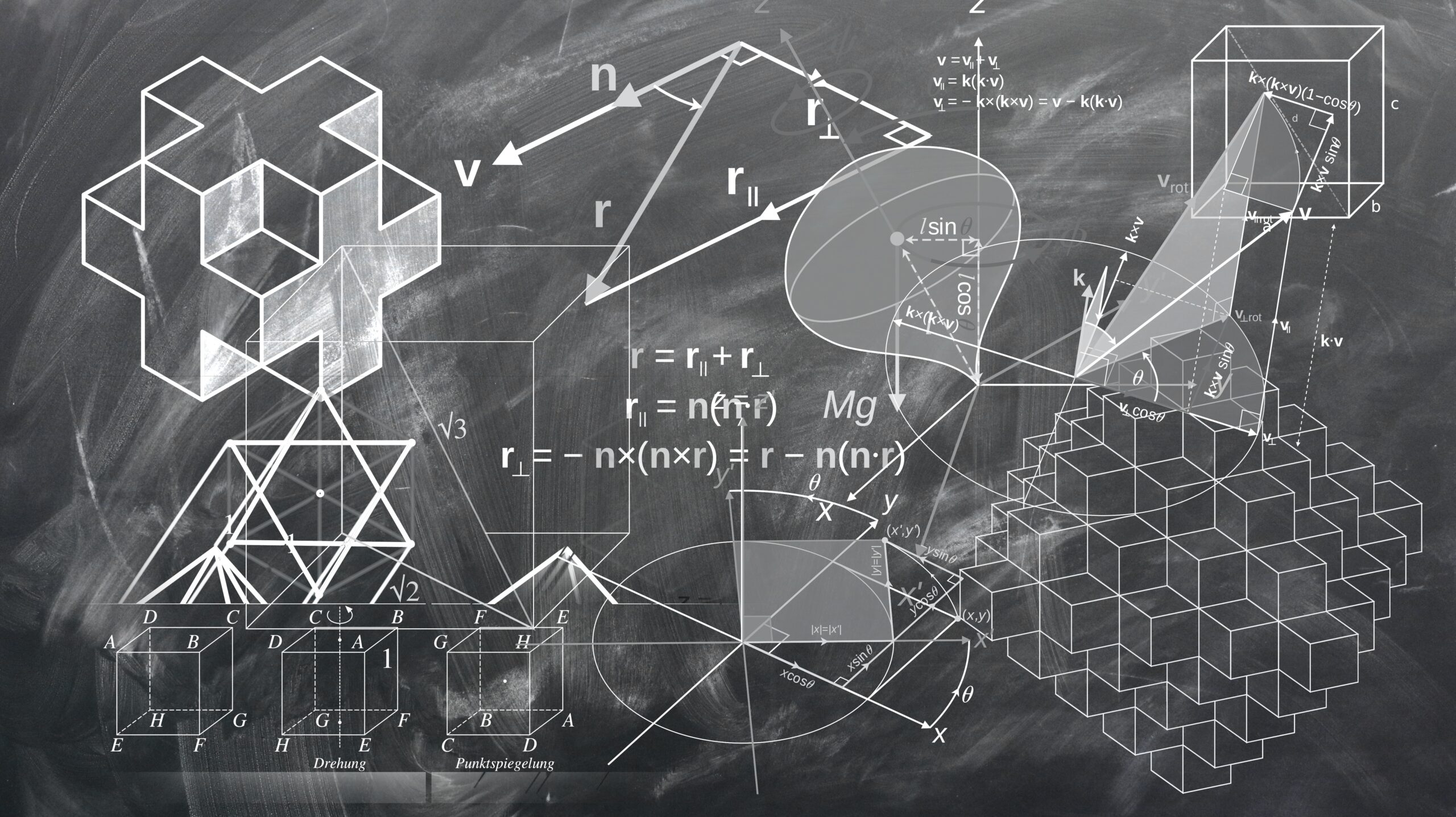
    Over the course of my nearly 15-year career, when my occupation comes up in conversation, I often hear people say, “I wanted to be an architect, but I didn’t think I could handle the math.” But the reality is, we don’t do much math.
    It is good for an architect to be comfortable with numbers. An architect occasionally uses basic algebra when plugging values into formulas and should understand concepts like perimeter, area, volume, angles, percentages, fractions, etc. But it is all middle-school-level math. We don’t use trigonometry or calculus. There are architects that design structural elements like foundations, beams, columns, etc. But most design teams include a structural engineer who handles that aspect.
    Before attending architecture school at Virginia Tech, I received my Bachelor of Arts Degree from Eastern Mennonite University in Mathematics. I had several semesters of calculus, probability, statistics, geometry, abstract math (don’t ask) among other courses. But I don’t use any of that now. The most helpful course for architecture was on statics, essentially the physical forces at work in structures that don’t move (which is really important for buildings). Later, in architecture school at Virginia Tech, I took more courses on structural design, which was the extent of the necessary math. These courses are a challenge for many architectural students. Fortunately for me, my undergraduate training made life easier.
    A good architect knows a little bit about everything, not just math or art. Here are some other subjects architects should grasp.
    A Little Bit About Everything
    Biology – The human eye, the human ear, and the human sense of comfort are all biological components affected by the built environment. Architects design better buildings when we understand them.
    Business – Architectural services must be provided in the context of a business with income and expenses, marketing, and other demands of the modern workplace. Architects need a handle on business principles to be able to keep doing their work.
    Chemistry – Buildings are made with the combination of many materials. Metals, concrete, paints, petroleum-based products, are just some of the materials which have a chemical composition that impacts their use in buildings.
    History – The best architecture understands its historical context in terms of location and in the arc of design through time.
    Physics – Gravity, wind, and earthquakes are some of the physical forces that buildings must resist.
    A Little Bit About Everything
    Philosophy – What is good? What is beautiful? Architects must use reason and logic when developing designs that function well with an immeasurable quality that we attribute to beauty.
    Psychology – Architects nearly always work for others and alongside others. As such, there are always personalities involved and an architect needs to navigate the group dynamics to keep the team working together for a successful project.
    Technology – Technology is always changing. Today we can use virtual reality to see a design or use programs to model a building’s energy use. This has significant impacts on how buildings are designed and constructed.
    Writing – The importance of communication cannot be overstated. Architects spend significant time in communication with others and most of that is writing; email, meeting minutes, notifications, contracts, just to name a few.
    So, don’t be fooled. Architects don’t do much math. Rather, we do some math but a lot of other stuff too!
  • Becoming an Architect: Starting the Great Adventure

    Becoming an Architect: Starting the Great Adventure

    The job market for architects is as good as it has ever been in the past 30+ years. Since founding Blueline in 2004, we’ve had the privilege of talking to many high school students exploring the profession. Here’s how to start the journey to joining one of the best professions.

    Becoming an Architect: Starting the Great Adventure

    Why Architecture?

    Architecture spans a wide range of interests and expertise. There is the creative rush of putting a pen to a blank piece of paper. For problem and puzzle solvers there is the intricate interweaving of materials and systems. We meet people stymied by the complexity and risk of a building project, guide them through the myriad of decisions and choices, then witness their wonder as their building takes form.

    Because architects see the big picture, foster collaboration, and think outside the box, we are uniquely equipped to tackle some of the world’s biggest problems. Whether it is climate change, affordable housing or new technology, architects lead in finding innovative solutions and opportunities.

    Becoming an Architect: Starting the Great Adventure

    Preparing for the Journey

    Architecture requires a college degree. This can either be a graduate or undergraduate degree. But the preparation for studying architecture begins before you graduate from high school.

    Most people assume that since there are significant technical components to architecture, it is logical to concentrate on math and science classes.  Others, seeing the artistic nature of design, assume art classes would be helpful.  There is value in having a solid foundation in both areas.

    But much of architecture is listening to people, understanding their ambitions and anxieties, and gaining their confidence. Learning how to speak and write clearly is essential.  Literature, history, and philosophy can help you understand the cultural context that shapes a person’s tastes and decisions.

    Travel is crucial. A person’s creative capacity is proportional to the number of places they’ve been and experiences they’ve had. And knowing another language makes travel even more impactful.

    We’re big advocates for construction experience. Even if your summer job was simply using a shovel or a broom, being around construction sites help you understand the priorities and needs of the men and women who make our drawings real.

    Becoming an Architect: Starting the Great Adventure

    The more well-rounded your knowledge and experience, the more you’ll get from your college education and the more options you’ll have as you enter the workforce.

    The Arc of a Career

    Graduating from architecture school is only the beginning. Much of what you’ll need to know, you’ll learn on the job during the first several years of your career.  Look for a firm committed to mentoring and equipping you to take your architectural registration exam (ARE).  In your first three to five years, work for two or three different firms. Try big firms and small firms. Try firms that do different types of work. If the firm keeps you in front of the computer, go to job sites on your lunch break or weekends. Continue to read, travel and be curious.

    Some of you may be content designing and creating construction documents. Others will be happiest working with contractors and being on the jobsite. Some of you will shine when you are in front of clients. You can manage, sell, or teach. The permutations are endless.

    Blueline provides job shadowing for ambitious high school juniors and seniors. Our team comes from all over the world and would be happy to talk to you about starting this journey. Visit our website www.blueline.team. We’re happy to connect you with the right staff person to answer your questions and help prepare you for this rewarding profession.

    Randy Seitz, AIA
    President | Architect


  • Overcoming Obstacles

    Overcoming Obstacles

    We’re just a few short weeks past the latest Super Bowl. Some of you watch it for the game, some for the halftime show, and some for the commercials. I personally didn’t feel strongly about either team—I was just hoping for a good game that wasn’t over by the second quarter. To that end, the game didn’t disappoint.

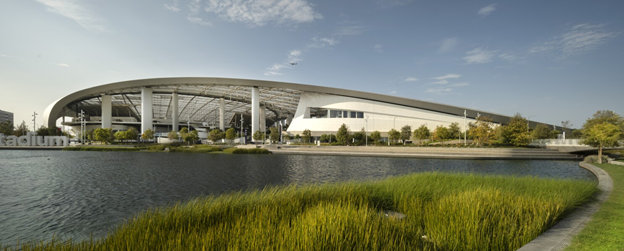
    The architect in me, however, was interested in the stadium. On television, SoFi stadium looks like any other stadium out there; one hundred yards of playing field with goal posts at each end, completely surrounded by tens of thousands of screaming fans, watching twenty-two players battle for sixty minutes to get the Lombardi trophy (and the trip to Disney World). The view on TV didn’t do the facility justice—there’s way more to it…

    Most professional sports stadiums are large behemoths surrounded by vast swaths of parking that tend to take over the area of the city where they’re located. SoFi is different in that it’s the centerpiece of a larger development – Hollywood Park. In addition to the stadium is the YouTube theater, which is connected to the stadium by the American Airlines Plaza; all of which are covered by a single sweeping roof structure. Other development on the site includes roughly 25 acres of public parks, green space, and a lake. 

    Overcoming Obstacles

    Adding to the complexity of an already challenging building is the fact that with its proximity to LAX, there are height restrictions imposed by the FAA. At first glance, this would seem like a project killer. Stadiums need to be tall to provide room for an adequate amount of seating to help justify the project cost, right? Normally, yes, that’s the way it’s always been done. I’m sure it would’ve been easy to say “It’s not possible. Find a new site and then we’ll talk.”  Luckily, that wasn’t the case. Some good, old-fashioned out of the box thinking found a way to meet the challenge—by burying the stadium in the ground.

    Overcoming Obstacles

    Placing the playing field roughly 100 feet below the exterior grade limited the height of the structure to meet the FAA requirements, while still providing a stadium worthy of the Super Bowl (and upcoming Olympic games). Much thought was put into the design to ensure that while being in the ground, the stadium doesn’t feel cavernous. This was accomplished primarily by means of a semi-transparent roof structure that is self-supporting and not connected to any walls, allowing both natural light and ocean breezes to permeate the space.

    I can guess what you’re thinking. Why is a firm that has no large stadiums in their portfolio spending so much time talking about a stadium? Besides the fact that as an architect, I geek out on such things, there is a larger point to make. It illustrates the value of Architects and their design teams. Positioned firmly at the intersection of art and science, Architects are uniquely qualified to provide the creative, out-of-the-box problem-solving that allows difficult obstacles to be overcome. This lays the groundwork for a building that meets client’s needs, represents them as an organization, and amplifies their mission and vision, giving them a home that’s uniquely theirs.

    In the words of one of my architecture professors, “They’re not obstacles, they’re opportunities.”

    Mike Wittig
    Senior Project Leader | Architect

  • Product Spotlight: J+J Invisions Kinetex

    Product Spotlight: J+J Invisions Kinetex

    “The Benefits of Soft Surface with the Performance of Hard-Surface”

    Product Spotlight: J+J Invisions Kinetex

    When deciding what type of flooring to install in a space, the first step is to answer the question, “What activities will the flooring need to support”. A soft surface, like carpet, can provide slip resistance, noise control, and enhanced temperature control. A hard surface, like LVT, luxury vinyl tile, can provide superior cleanability and crush resistance. However, there are plenty of spaces, such as dining facilities or multipurpose rooms, that require all the above. J+J Invisions has created a product to do just that; provide the benefits of a soft surface with the performance of a hard surface. Kinetex flooring provides a durable, low maintenance floor with health, safety, and acoustic benefits, all while providing comfort to its occupants.                       

    Durability

    When put to the test, Kinetex delivers enduring performance. Its dimensional stability and crush resistance allow this product to withstand heavy use without compromising product quality. Heavy furniture will not crush the fibers and consistent foot traffic will not wear down the color or thickness.

    Product Spotlight: J+J Invisions Kinetex

    Maintenance

    There’s no special training required to maintain a Kinetex floor. The maintenance is similar to carpet, in that it only requires vacuuming with the periodic encapsulation cleaning. Due to the lightweight construction, Kinetex dries 75% faster than carpet and retains less water. It’s limited ability to retain water allows for quick clean up and resistance to most staining agents like coffee, ketchup, and food grease.

    Health

    Airborne particulates enter our spaces every day. These particulates are what trigger allergies and cause infections. When the particulates hit a hard surface they are easily redistributed through foot traffic and circulate into our “breathing zone”. When these particulates hit a Kinetex surface they are trapped until they can be removed by cleaning.

    Product Spotlight: J+J Invisions Kinetex

    Safety

    Risks of slips, trips and falls can pose an immediate threat to people of all ages, and most are avoidable with consideration to flooring selection based on the specific needs and requirements of the building. Several tests are completed to determine a material’s coefficient of friction. The higher the coefficient of friction the lower the risk of slips. Kinetex is certified as high-traction by the national floor safety institute and considered the most slip resistant surfaces tested.

    Product Spotlight: J+J Invisions Kinetex

    Acoustics

    When sound waves hit a hard surface, they are easily bounced back into the air creating a noisy environment. When sound waves hit a soft surface, the surface absorbs some of these waves creating a quieter environment. Due to the knitted fabric of the Kinetex flooring, Kinetex can absorb some of these sound waves offering an improved occupant perception and focus.

    Product Spotlight: J+J Invisions Kinetex

    Comfort

    Kinetex’s high-density backing and soft textile surface provides antifatigue properties along with minimal rolling resistance. It embodies the potential to absorb energy and reduce both repetitive foot stress injuries and injuries related to walking and moving frequently from place to place. With its thermal insulation properties, Kinetex also provides a warmer indoor environment.   

    Product Spotlight: J+J Invisions Kinetex


    Houwman, C. (2020, June 11). What is Kinetex? high-performance soft-surface flooring. J+J Flooring Group. Retrieved January 31, 2022, from https://www.jjflooringgroup.com/what-is-kinetex/

    Kristin LaPorta, NCIDQ, ASID
    Interior Designer

  • Four Design Features Higher Education Students Will Love

    Four Design Features Higher Education Students Will Love

    Four Design Features Higher Education Students Will Love

    1. Photo Worthy Design Features – Taking and sharing photos on social media has become almost instinctual for students of this generation; it’s all about finding what is Instagram-worthy. For example, millions of people travel from across the world to take pictures at iconic places like the Eiffel Tower in Paris, France, Cloud Gate “The Bean” in Chicago, Illinois, or the Statue of Liberty in New York, New York. We can use architecture and design to recreate this concept on a smaller scale by creating iconic moments around your campus. Whether it be a cascading multistory feature wall in a lobby, an interesting staircase, or a historic building on campus, these “photo-worthy” design features can help your school stand out among others by catching the eye of students who are touring a half-dozen or more campuses.

    2. Community Space at a Smaller Scale – Large communal spaces have always been a growing trend in higher education design, but COVID-19 has forced colleges and universities to accommodate smaller numbers while continuing to foster a sense of community. One way to achieve this is by finding underutilized spaces within your existing floor plan to create “pockets” for smaller communal spaces. These spaces can then be reserved by small groups of students for study or collaboration sessions during scheduled timeslots. By providing several smaller gathering spaces around your campus rather than one large communal space – we can still encourage collaboration, but do so safely.

    3. Space to Focus – While providing community areas is important for collaboration, providing focus areas is just as important when designing university spaces. For students who focus best in an environment with buzzing background noise, a cafĂ© may be the perfect place. For others, who require quiet time with minimal distraction, it is important to provide private breakout spaces. When designing a classroom building—whether new construction or renovation—make sure to carve out space for small – one person – rooms that provide students a place to step away from distraction. If you are working within an existing space where moving walls isn’t an option, you can create these quiet spaces with furniture.

    4. The Ability to Work Anywhere – Now, more than ever, students expect to be able to do their work nearly anywhere. Whether in a classroom, lounge, coffee shop, or in the hallway between classes, it is important to equip your space with mobile technology and provide flexibility to students wherever they need it. This can be as simple as integrating power into a built-in bench or creating breakout areas equipped with tv monitors for students to collaborate in small groups. The design of your space should make it easy for students to create, interact, and share-content in real-time.

    Kirsten Weston
    Design Associate

  • Change in the Workplace

    Change in the Workplace

    Ch-Ch-Ch-CHANGE. Something to embrace, or run and hide from? Change is an inevitable part of life that motivates and challenges some but causes anxiety for others. No matter how we feel about change it is part of our personal life and our professional world and WILL BE encountered. Adapting to change is key for us as individuals and critical for businesses, allowing us to remain relevant and competitive.

    Change in the Workplace

    As an employee, take the time to understand how to deal with change that is on the horizon. Being open to change can enhance your ability to communicate, help you work as a valuable team member while adapting to the changes, and strengthen your professional bond with coworkers. This demonstration of adaptability also shows your superiors that you can be relied upon.

    During a season of change, it will be crucial to maintain communication with your direct supervisor who can help you navigate new tasks or processes. Take time to ask the questions that need to be asked. Even simple questions can give you a better understanding of how to complete any new tasks or processes and better understand why the changes are necessary. If new technology or skills are required, take initiative to look for ways to become more comfortable with them, even if outside of your work hours. This positive outlook on workplace changes will influence your ability to accept and adapt to them making it easier to accommodate change as it is happening. The goal is to be able to continue performing at an optimal level.

    Change in the Workplace

    If the challenge of change is taking its toll on you, schedule a personal day to recharge and gain the energy needed to implement those changes effectively. This habit can limit the potential for burnout and help you come back to the work environment with a renewed sense of productivity. Dealing with change can be a challenge, but remember, all change becomes routine with time.

    “The measure of intelligence is the ability to change” ~ Albert Einstein

    Melanie Eby
    Manager of Administration & Human Resources