By Ian Elmore, Designer | Published on March 1, 2023
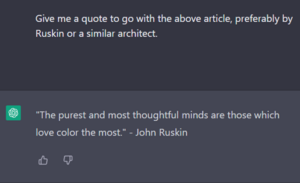
“The purest and most thoughtful minds are those which love color the most.” – John Ruskin
The past few months have seen exciting developments in the field of Artificial Intelligence (A.I.), also called Machine Learning. Text-to-image A.I. like Stable Diffusion and Midjourney are causing a panic in the art world. OpenAI’s ChatGPT is already causing shifts in copywriting, and software development. On the other hand attempts to bring an AI lawyer to court have floundered. Universities have become an arm race between A.I.-authored term papers, and AI that detect A.I.-written term papers. Headlines about a coming digital “apocalypse” stress the real threats that this technology can create. It seems like every industry is talking of disruption as big as the advent of the internet, and the real implications of this technology aren’t clear yet.
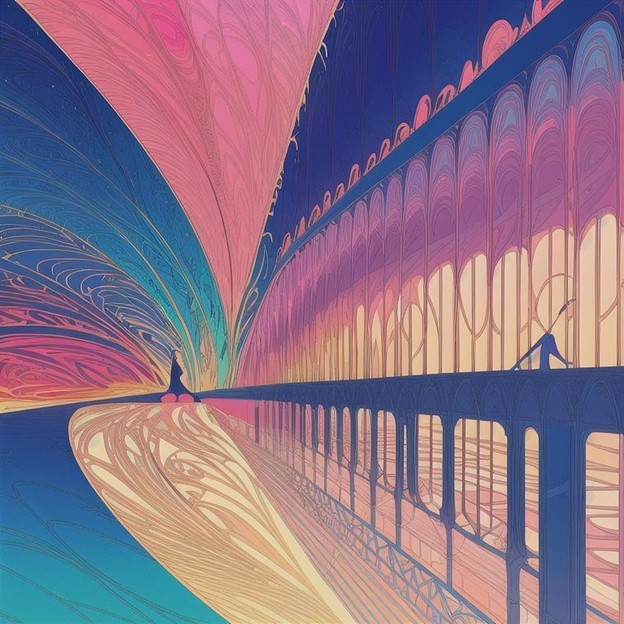
In my own explorations of this technology, I was shocked at how quickly these programs could create a personal portrait in the style of Van Gogh or rewrite a car manual in iambic pentameter. Soon however, the limits start to become apparent: extra fingers, meaningless phrases, factual errors. The computer can mimic what it has seen before, but on closer inspection the less it comprehends the subject matter. It knows what shadows look like, but it does not understand where they come from. With time you can pick up its patterns, and the results all seem to look the same. It is another tool, and a tool does not have creativity and it does not have responsibility, those things come from how it is used. Once the novelty of new technology is past, it will only have the meaning that we put into it.
But as architects and designers this is something we are used to. Our role, our value, has never been in laying the bricks or even producing the construction drawings. Design is the process that begins with helping a client define their needs, working together to craft it into a vision, and guiding that vision through realization. A design professional understands what they are building and why it ought to exist. AI offers exciting new opportunities, but it does not replace the process.
Some of our staff started with hand-drawing production work, some started with 2d CAD software. These days most of us work in a 3d BIM environment. Within a lifetime we have seen complete shifts in the tools we use day to day, but the craft remains the same. Many of us still sketch by hand, a quick sketch often communicating a concept better than a photorealistic rendering could. This week I used StableDiffusion to quickly generate mural concepts for a project, but those will only be inspiration for a human artist. I wrote this blog, but chatGPT picked the quote. As design professionals, we look past the lines on the paper to what they represent, and what they will become. That is the lasting value.
Leave a Reply
You must be logged in to post a comment.