Tag: architecture

  • Beyond Preservation: Transforming Silos into Community Hubs

    Beyond Preservation: Transforming Silos into Community Hubs

    By Jack Duran, AIA, Vice President | Regional Director | Published on September 24, 2025


    For generations, the silos around the country have stood as landmarks along the railways, shaping town skylines and reminding communities of their agricultural roots. Once central to a thriving farming economy, these towering silos served as hubs where harvests were dried, stored, and shipped nationwide. Today, even as fields have been replaced by neighborhoods and commerce, the silos remain, silent yet powerful symbols of heritage and continuity.

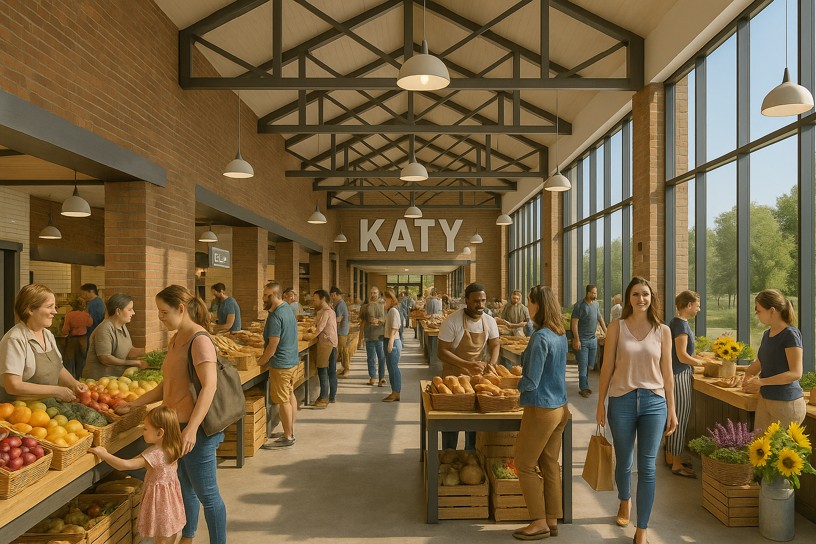
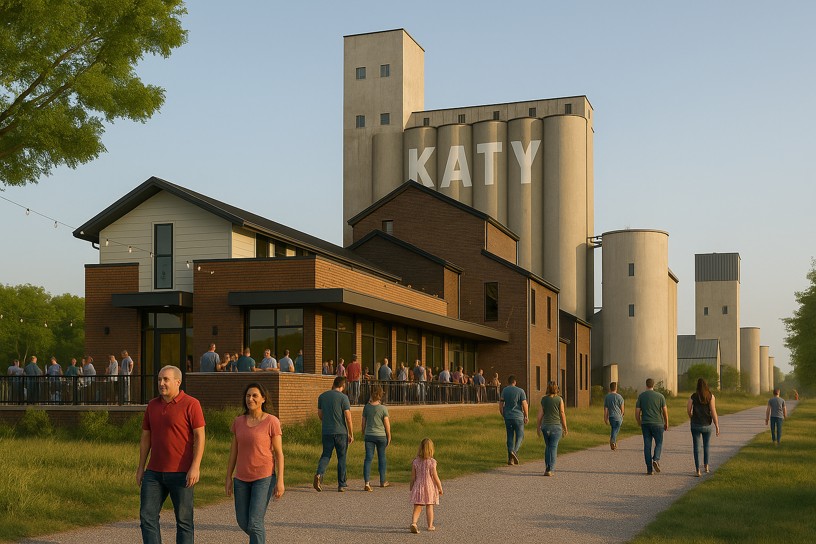
    LDDBlueline envisions a future where these historic structures are not simply preserved, but reactivated as the centerpiece of a new commercial district.

    Beyond Preservation: Transforming Silos into Community Hubs

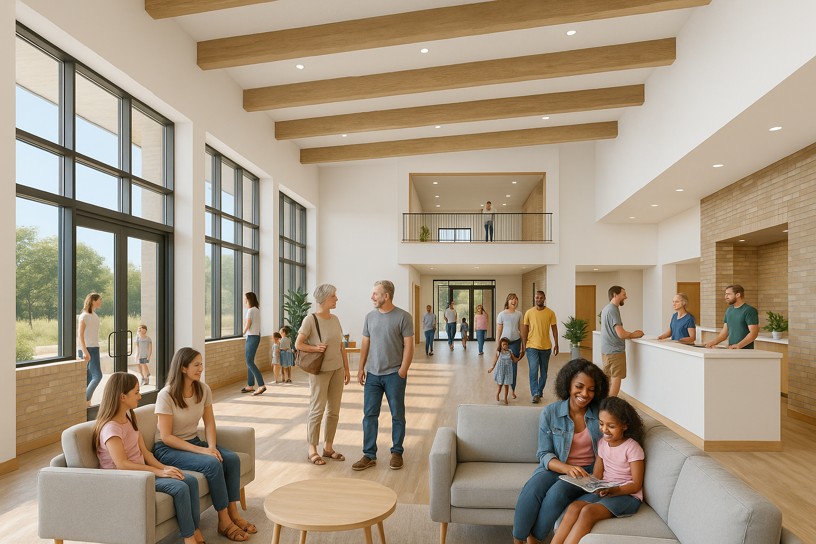
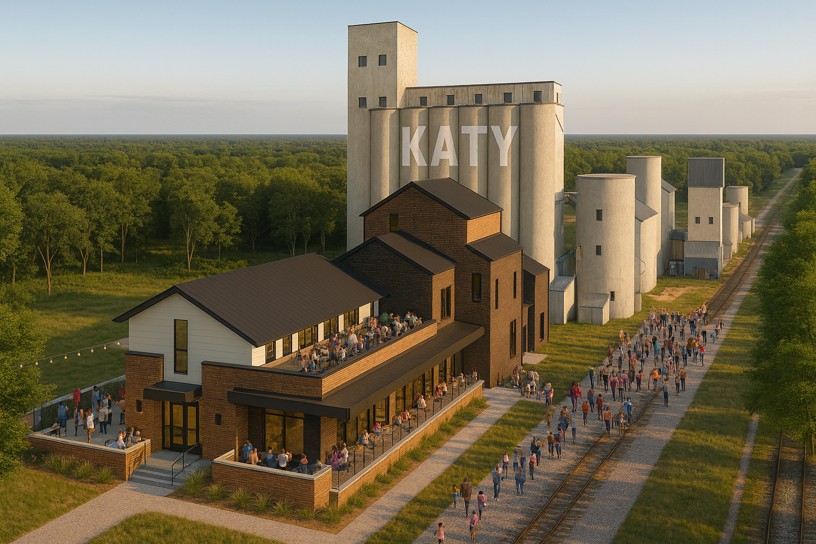
    By boldly inscribing the silos with a community’s name, they remain recognizable landmarks, while surrounding brick and metal buildings echo their industrial character and provide space for shops, restaurants, and public gathering areas.

    Pathways and plazas connect people to the site, creating places for families and visitors to gather. Shaded terraces, lighting, and landscaped walks foster a welcoming environment that recalls the spirit of the harvest season, now celebrated throughout the year.

    Beyond Preservation: Transforming Silos into Community Hubs

    The design balances memory with modern purpose, transforming what was once utilitarian into a civic and cultural hub.

    In doing so, the silos become more than relics, they emerge as active symbols of resilience, structures that once supported farming now supporting community life. LDDBlueline welcomes the opportunity to help communities reimagine their historic icons as vibrant centers of untapped potential.

    Beyond Preservation: Transforming Silos into Community Hubs

  • Innovative Solutions for Budget-Driven Educational School Projects:  Embracing Pre-Engineered Metal Buildings

    Innovative Solutions for Budget-Driven Educational School Projects: Embracing Pre-Engineered Metal Buildings

    By Jack Duran, AIA, Vice President | Regional Director | Published on June 6, 2024

    Innovative Solutions for Budget-Driven Educational School Projects: Embracing Pre-Engineered Metal Buildings

    Private and charter schools often face unique challenges in educational infrastructure, particularly regarding funding. The need for cost-effective solutions without compromising quality or aesthetics is paramount in Texas, where limited or no state funds per student are allocated. In response to this challenge, forward-thinking architecture firms are considering innovative approaches, such as utilizing pre-engineered metal buildings (PEMBs) as structural frames, to deliver exceptional educational facilities within tight budgets.


    Pre-engineered metal buildings have long been recognized for their efficiency, durability, and cost-effectiveness in various construction projects. Traditionally associated with warehouses and industrial facilities, PEMBs have undergone significant advancements in design and technology, making them a viable option for educational buildings.


    Cost-Effectiveness

    One of the primary reasons for choosing PEMBs in budget-driven school projects is their cost-effectiveness. With private and charter schools operating within limited budgets, PEMBs offer significant savings compared to traditional construction methods. The streamlined manufacturing process and ease of assembly reduce construction time and labor costs, translating into overall project savings.


    Structural Integrity and Durability

    Despite their cost-effectiveness, PEMBs do not compromise on structural integrity or durability. Engineered to withstand harsh weather conditions and provide long-term stability, these buildings offer a reliable and resilient solution for educational facilities. This is particularly important for schools in regions prone to extreme weather events, such as hurricanes or tornadoes.


    Flexibility in Design

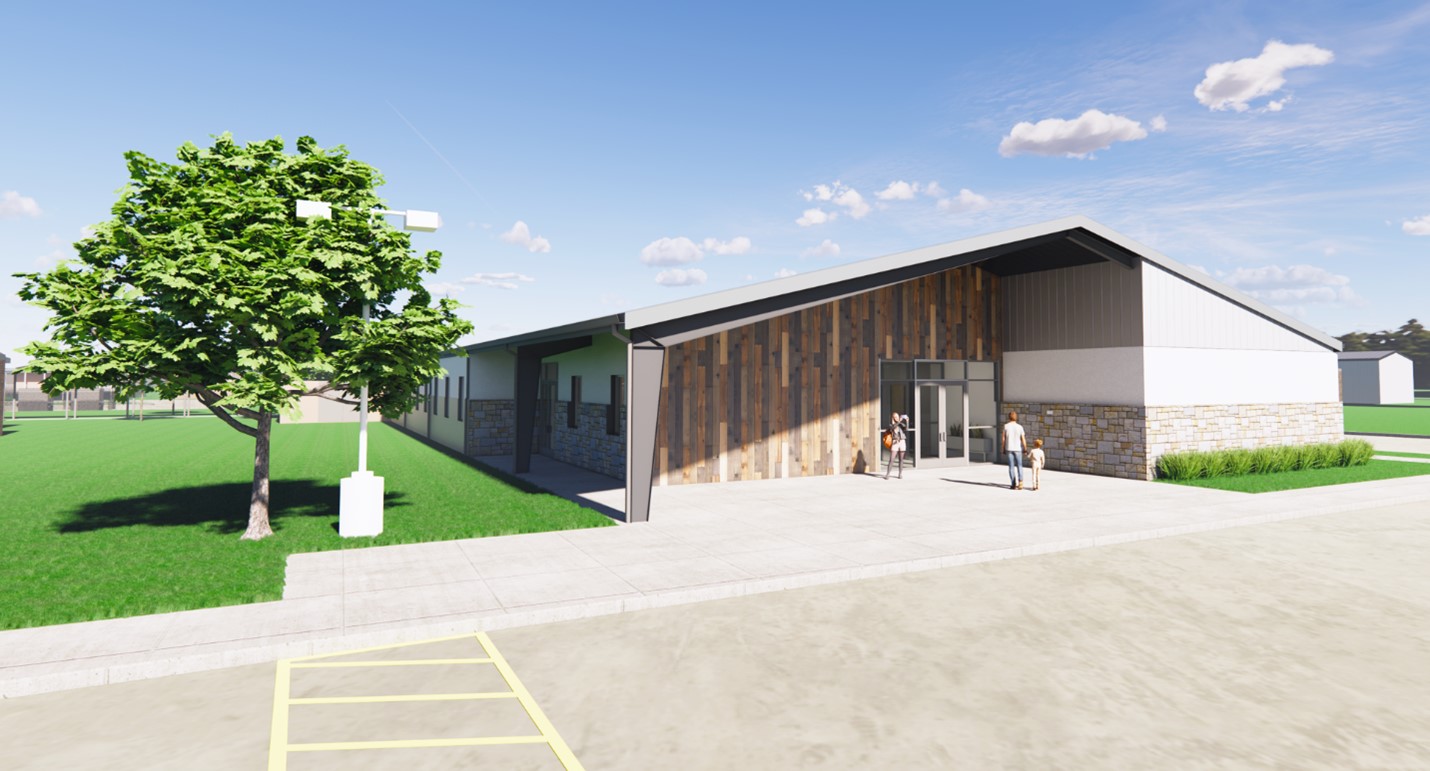
    Contrary to popular misconceptions, choosing a PEMB as a structural frame does not limit design possibilities. Modern PEMB systems offer a high degree of flexibility regarding architectural aesthetics and functional layout. Schools can customize their building envelopes with various exterior finishes, including masonry and stone, to achieve the desired look and feel while staying within budget constraints.


    Sustainable Construction

    In today’s environmentally conscious world, sustainability is a key consideration in construction projects. PEMBs are inherently sustainable, as they are often fabricated from recycled materials and can be easily disassembled and reused if necessary. Additionally, the energy efficiency of metal buildings can contribute to reduced operational costs for educational institutions in the long run.


    Case Study: LDDBlueline’s Approach

    LDDBlueline specializes in designing educational facilities for private and charter schools in Texas. Its focus is on maximizing value without compromising quality. The firm has embraced pre-engineered metal buildings in several projects, recognizing the importance of budget-driven solutions.


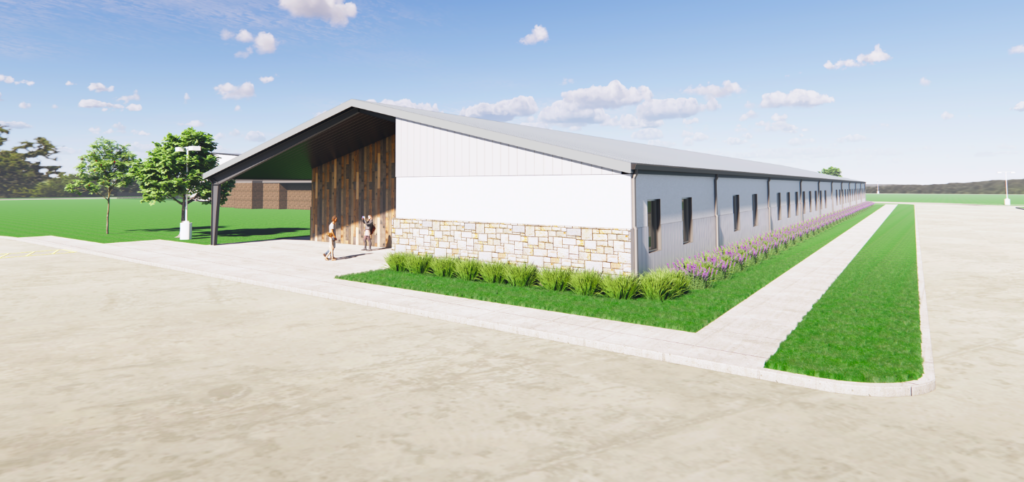
    One notable example is a Charter School, where the firm integrated PEMBs as the structural frame while incorporating high-quality exterior finishes to enhance the building’s aesthetic appeal. By strategically combining cost-effective materials with innovative design solutions, LDDBlueline delivers a new Grade School building that meets the school’s functional requirements while staying within budget constraints.
     

    Innovative Solutions for Budget-Driven Educational School Projects: Embracing Pre-Engineered Metal Buildings

    Conclusion

    In conclusion, using pre-engineered metal buildings as structural frames presents a compelling solution for budget-driven educational school projects, particularly in contexts with limited funding. By leveraging the cost-effectiveness, structural integrity, and design flexibility of PEMBs, architecture firms can deliver high-quality educational facilities that meet the needs of students, educators, and communities alike. With careful planning and innovative design strategies, budget constraints need not limit the creation of inspiring learning environments for the next generation.


  • Unlocking Potential:  Human Resources as the Engine of Organizational Excellence

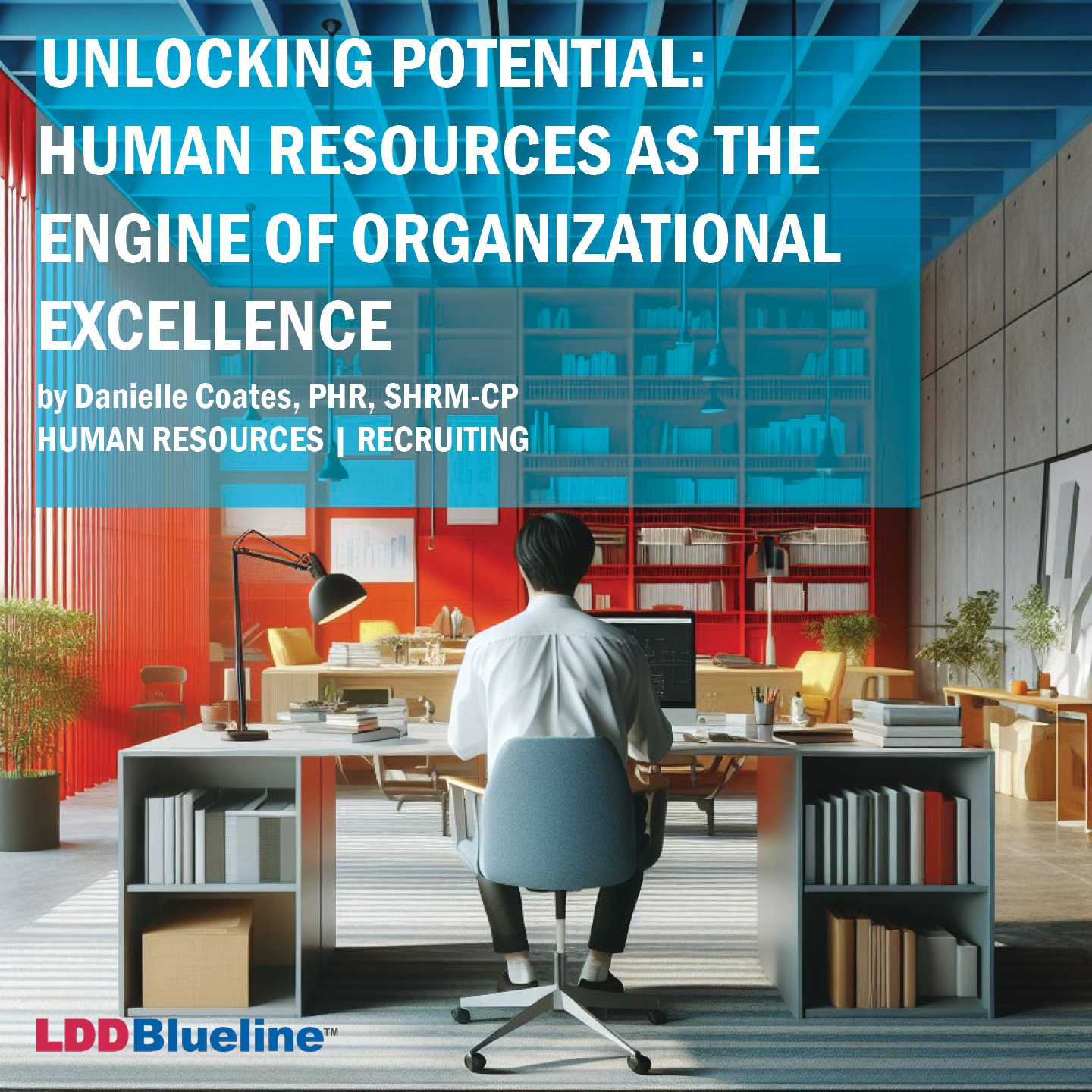
    Unlocking Potential: Human Resources as the Engine of Organizational Excellence

    By Danielle Coates, PHR, SHRM-CP, Human Resources | Recruiting | Published on May 28, 2024

    My journey into Human Resources began in college through an HR work-study program in the banking industry at a Fortune 500 company. I was fortunate to experience traditional HR and organizational development there, which gave me a well-rounded glimpse into the world of HR. I graduated with a degree in Business Management with a concentration in HR (yes, I am working in my field of study 😊). Throughout my career, I’ve gained extensive HR experience at rapidly growing companies across various industries, including pharmaceutical, banking, real estate/appraisal management, medical equipment, and now most recently HR in the AEC (architecture, engineering and construction) space. I’ve obtained HR-specific certifications (PHR and SHRM-CP), continually striving to enhance my expertise. Along the way, I’ve had numerous mentors who have guided me, reinforcing the importance of HR as a strategic partner in any organization.

    At LDDBlueline our mission is to deliver innovative buildings of lasting value that exceed client expectations. In order to support that mission, it is vital to have personnel policies and practices that ensure that employees are provided the tools they need to grow professionally. For example, licensure and career development is very important at the firm, so we provide support for employees to obtain further education and certifications. Additionally, we have implemented a quarterly review process to replace annual reviews to provide timely feedback and support for professional development. We want our employees to have a clear path to success within the firm.

    At LDDBlueline, our core values are Honor, Integrity, Generosity, and Humility. The culture at our firm can be described as one of creativity, collaboration, and commitment to excellence. In order to drive that culture, we employ several strategies to attract, develop, and retain top talent, and we must constantly re-evaluate these strategies in an ever-changing employment environment.  We have several professional development initiatives underway, including a mentor and internship program, which follows our organization’s commitment to excellence. Additionally, all employees fill out a weekly reporting system to highlight comments, tasks and concerns from employees that is shared with our leadership team. 

    LDDBlueline’s mission, values, and culture should drive every decision we make, including influencing HR practices.  As the HR and Recruiting leader, I am a strategic partner working with both employees and leaders to help ensure we are all headed in the same direction. I oversee the execution of HR processes, policies and procedures, strategies, programs, and operations. I work closely with all stakeholders to ensure our HR and Recruiting practices align with our business goals. At LDDBlueline, we believe in doing what we say and saying what we do, ensuring transparency and trust within our team. 

    Lastly, we are hiring!! If you are interested in learning more about career opportunities, please send your resume to careers@i-hate-architects.wr.ardent.dev

  • Architecture in the A.I. Apocalypse

    Architecture in the A.I. Apocalypse

    By Ian Elmore, Designer | Published on March 1, 2023

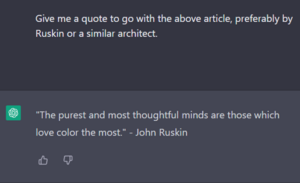
    “The purest and most thoughtful minds are those which love color the most.” – John Ruskin

    The past few months have seen exciting developments in the field of Artificial Intelligence (A.I.), also called Machine Learning.  Text-to-image A.I. like Stable Diffusion and Midjourney are causing a panic in the art world.  OpenAI’s ChatGPT is already causing shifts in copywriting, and software development. On the other hand attempts to bring an AI lawyer to court have floundered.  Universities have become an arm race between A.I.-authored term papers, and AI that detect A.I.-written term papers.  Headlines about a coming digital “apocalypse” stress the real threats that this technology can create.   It seems like every industry is talking of disruption as big as the advent of the internet, and the real implications of this technology aren’t clear yet.

    In my own explorations of this technology, I was shocked at how quickly these programs could create a personal portrait in the style of Van Gogh or rewrite a car manual in iambic pentameter.  Soon however, the limits start to become apparent: extra fingers, meaningless phrases, factual errors.  The computer can mimic what it has seen before, but on closer inspection the less it comprehends the subject matter.  It knows what shadows look like, but it does not understand where they come from.  With time you can pick up its patterns, and the results all seem to look the same.  It is another tool, and a tool does not have creativity and it does not have responsibility, those things come from how it is used. Once the novelty of new technology is past, it will only have the meaning that we put into it.

    But as architects and designers this is something we are used to. Our role, our value, has never been in laying the bricks or even producing the construction drawings. Design is the process that begins with helping a client define their needs, working together to craft it into a vision, and guiding that vision through realization.  A design professional understands what they are building and why it ought to exist.  AI offers exciting new opportunities, but it does not replace the process.

    Some of our staff started with hand-drawing production work, some started with 2d CAD software.  These days most of us work in a 3d BIM environment.  Within a lifetime we have seen complete shifts in the tools we use day to day, but the craft remains the same.  Many of us still sketch by hand, a quick sketch often communicating a concept better than a photorealistic rendering could.  This week I used StableDiffusion to quickly generate mural concepts for a project, but those will only be inspiration for a human artist.  I wrote this blog, but chatGPT picked the quote.  As design professionals, we look past the lines on the paper to what they represent, and what they will become.  That is the lasting value.

    Architecture in the A.I. Apocalypse