Author: a072c900_admin

  • Overcoming Obstacles

    Overcoming Obstacles

    We’re just a few short weeks past the latest Super Bowl. Some of you watch it for the game, some for the halftime show, and some for the commercials. I personally didn’t feel strongly about either team—I was just hoping for a good game that wasn’t over by the second quarter. To that end, the game didn’t disappoint.

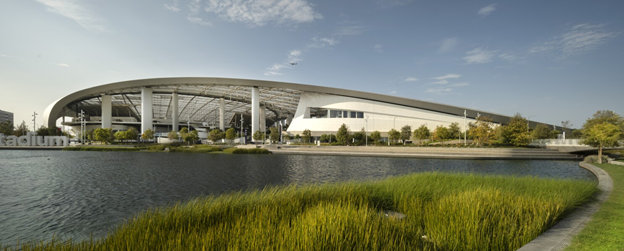
    The architect in me, however, was interested in the stadium. On television, SoFi stadium looks like any other stadium out there; one hundred yards of playing field with goal posts at each end, completely surrounded by tens of thousands of screaming fans, watching twenty-two players battle for sixty minutes to get the Lombardi trophy (and the trip to Disney World). The view on TV didn’t do the facility justice—there’s way more to it…

    Most professional sports stadiums are large behemoths surrounded by vast swaths of parking that tend to take over the area of the city where they’re located. SoFi is different in that it’s the centerpiece of a larger development – Hollywood Park. In addition to the stadium is the YouTube theater, which is connected to the stadium by the American Airlines Plaza; all of which are covered by a single sweeping roof structure. Other development on the site includes roughly 25 acres of public parks, green space, and a lake. 

    Overcoming Obstacles

    Adding to the complexity of an already challenging building is the fact that with its proximity to LAX, there are height restrictions imposed by the FAA. At first glance, this would seem like a project killer. Stadiums need to be tall to provide room for an adequate amount of seating to help justify the project cost, right? Normally, yes, that’s the way it’s always been done. I’m sure it would’ve been easy to say “It’s not possible. Find a new site and then we’ll talk.”  Luckily, that wasn’t the case. Some good, old-fashioned out of the box thinking found a way to meet the challenge—by burying the stadium in the ground.

    Overcoming Obstacles

    Placing the playing field roughly 100 feet below the exterior grade limited the height of the structure to meet the FAA requirements, while still providing a stadium worthy of the Super Bowl (and upcoming Olympic games). Much thought was put into the design to ensure that while being in the ground, the stadium doesn’t feel cavernous. This was accomplished primarily by means of a semi-transparent roof structure that is self-supporting and not connected to any walls, allowing both natural light and ocean breezes to permeate the space.

    I can guess what you’re thinking. Why is a firm that has no large stadiums in their portfolio spending so much time talking about a stadium? Besides the fact that as an architect, I geek out on such things, there is a larger point to make. It illustrates the value of Architects and their design teams. Positioned firmly at the intersection of art and science, Architects are uniquely qualified to provide the creative, out-of-the-box problem-solving that allows difficult obstacles to be overcome. This lays the groundwork for a building that meets client’s needs, represents them as an organization, and amplifies their mission and vision, giving them a home that’s uniquely theirs.

    In the words of one of my architecture professors, “They’re not obstacles, they’re opportunities.”

    Mike Wittig
    Senior Project Leader | Architect
  • Product Spotlight: J+J Invisions Kinetex

    Product Spotlight: J+J Invisions Kinetex

    “The Benefits of Soft Surface with the Performance of Hard-Surface”

    Product Spotlight: J+J Invisions Kinetex

    When deciding what type of flooring to install in a space, the first step is to answer the question, “What activities will the flooring need to support”. A soft surface, like carpet, can provide slip resistance, noise control, and enhanced temperature control. A hard surface, like LVT, luxury vinyl tile, can provide superior cleanability and crush resistance. However, there are plenty of spaces, such as dining facilities or multipurpose rooms, that require all the above. J+J Invisions has created a product to do just that; provide the benefits of a soft surface with the performance of a hard surface. Kinetex flooring provides a durable, low maintenance floor with health, safety, and acoustic benefits, all while providing comfort to its occupants.                       

    Durability

    When put to the test, Kinetex delivers enduring performance. Its dimensional stability and crush resistance allow this product to withstand heavy use without compromising product quality. Heavy furniture will not crush the fibers and consistent foot traffic will not wear down the color or thickness.

    Product Spotlight: J+J Invisions Kinetex

    Maintenance

    There’s no special training required to maintain a Kinetex floor. The maintenance is similar to carpet, in that it only requires vacuuming with the periodic encapsulation cleaning. Due to the lightweight construction, Kinetex dries 75% faster than carpet and retains less water. It’s limited ability to retain water allows for quick clean up and resistance to most staining agents like coffee, ketchup, and food grease.

    Health

    Airborne particulates enter our spaces every day. These particulates are what trigger allergies and cause infections. When the particulates hit a hard surface they are easily redistributed through foot traffic and circulate into our “breathing zone”. When these particulates hit a Kinetex surface they are trapped until they can be removed by cleaning.

    Product Spotlight: J+J Invisions Kinetex

    Safety

    Risks of slips, trips and falls can pose an immediate threat to people of all ages, and most are avoidable with consideration to flooring selection based on the specific needs and requirements of the building. Several tests are completed to determine a material’s coefficient of friction. The higher the coefficient of friction the lower the risk of slips. Kinetex is certified as high-traction by the national floor safety institute and considered the most slip resistant surfaces tested.

    Product Spotlight: J+J Invisions Kinetex

    Acoustics

    When sound waves hit a hard surface, they are easily bounced back into the air creating a noisy environment. When sound waves hit a soft surface, the surface absorbs some of these waves creating a quieter environment. Due to the knitted fabric of the Kinetex flooring, Kinetex can absorb some of these sound waves offering an improved occupant perception and focus.

    Product Spotlight: J+J Invisions Kinetex

    Comfort

    Kinetex’s high-density backing and soft textile surface provides antifatigue properties along with minimal rolling resistance. It embodies the potential to absorb energy and reduce both repetitive foot stress injuries and injuries related to walking and moving frequently from place to place. With its thermal insulation properties, Kinetex also provides a warmer indoor environment.   

    Product Spotlight: J+J Invisions Kinetex


    Houwman, C. (2020, June 11). What is Kinetex? high-performance soft-surface flooring. J+J Flooring Group. Retrieved January 31, 2022, from https://www.jjflooringgroup.com/what-is-kinetex/

    Kristin LaPorta, NCIDQ, ASID
    Interior Designer

  • Four Design Features Higher Education Students Will Love

    Four Design Features Higher Education Students Will Love

    Four Design Features Higher Education Students Will Love

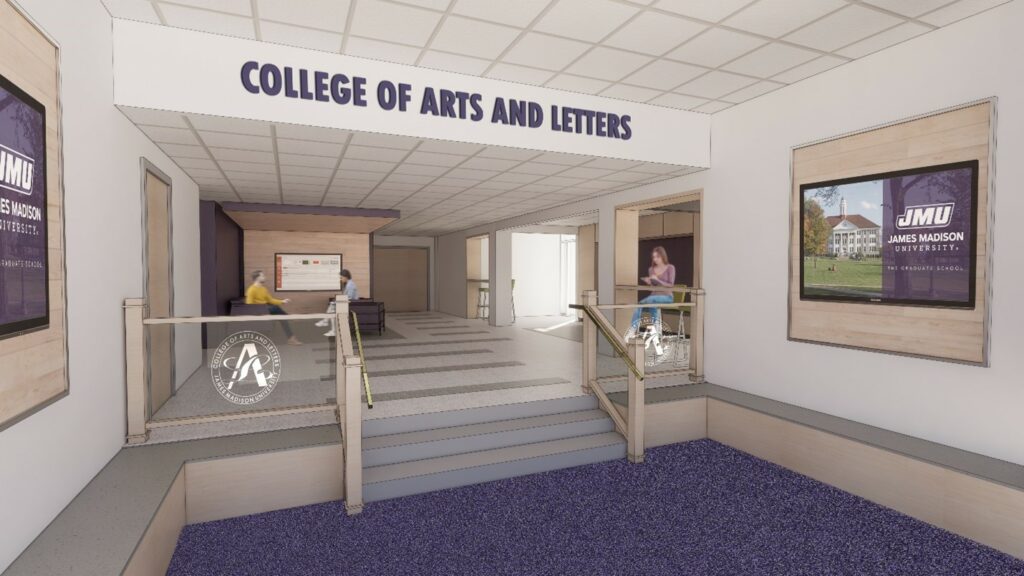
    1. Photo Worthy Design Features – Taking and sharing photos on social media has become almost instinctual for students of this generation; it’s all about finding what is Instagram-worthy. For example, millions of people travel from across the world to take pictures at iconic places like the Eiffel Tower in Paris, France, Cloud Gate “The Bean” in Chicago, Illinois, or the Statue of Liberty in New York, New York. We can use architecture and design to recreate this concept on a smaller scale by creating iconic moments around your campus. Whether it be a cascading multistory feature wall in a lobby, an interesting staircase, or a historic building on campus, these “photo-worthy” design features can help your school stand out among others by catching the eye of students who are touring a half-dozen or more campuses.

    2. Community Space at a Smaller Scale – Large communal spaces have always been a growing trend in higher education design, but COVID-19 has forced colleges and universities to accommodate smaller numbers while continuing to foster a sense of community. One way to achieve this is by finding underutilized spaces within your existing floor plan to create “pockets” for smaller communal spaces. These spaces can then be reserved by small groups of students for study or collaboration sessions during scheduled timeslots. By providing several smaller gathering spaces around your campus rather than one large communal space – we can still encourage collaboration, but do so safely.

    3. Space to Focus – While providing community areas is important for collaboration, providing focus areas is just as important when designing university spaces. For students who focus best in an environment with buzzing background noise, a café may be the perfect place. For others, who require quiet time with minimal distraction, it is important to provide private breakout spaces. When designing a classroom building—whether new construction or renovation—make sure to carve out space for small – one person – rooms that provide students a place to step away from distraction. If you are working within an existing space where moving walls isn’t an option, you can create these quiet spaces with furniture.

    4. The Ability to Work Anywhere – Now, more than ever, students expect to be able to do their work nearly anywhere. Whether in a classroom, lounge, coffee shop, or in the hallway between classes, it is important to equip your space with mobile technology and provide flexibility to students wherever they need it. This can be as simple as integrating power into a built-in bench or creating breakout areas equipped with tv monitors for students to collaborate in small groups. The design of your space should make it easy for students to create, interact, and share-content in real-time.

    Kirsten Weston
    Design Associate

  • Change in the Workplace

    Change in the Workplace

    Ch-Ch-Ch-CHANGE. Something to embrace, or run and hide from? Change is an inevitable part of life that motivates and challenges some but causes anxiety for others. No matter how we feel about change it is part of our personal life and our professional world and WILL BE encountered. Adapting to change is key for us as individuals and critical for businesses, allowing us to remain relevant and competitive.

    Change in the Workplace

    As an employee, take the time to understand how to deal with change that is on the horizon. Being open to change can enhance your ability to communicate, help you work as a valuable team member while adapting to the changes, and strengthen your professional bond with coworkers. This demonstration of adaptability also shows your superiors that you can be relied upon.

    During a season of change, it will be crucial to maintain communication with your direct supervisor who can help you navigate new tasks or processes. Take time to ask the questions that need to be asked. Even simple questions can give you a better understanding of how to complete any new tasks or processes and better understand why the changes are necessary. If new technology or skills are required, take initiative to look for ways to become more comfortable with them, even if outside of your work hours. This positive outlook on workplace changes will influence your ability to accept and adapt to them making it easier to accommodate change as it is happening. The goal is to be able to continue performing at an optimal level.

    Change in the Workplace

    If the challenge of change is taking its toll on you, schedule a personal day to recharge and gain the energy needed to implement those changes effectively. This habit can limit the potential for burnout and help you come back to the work environment with a renewed sense of productivity. Dealing with change can be a challenge, but remember, all change becomes routine with time.

    “The measure of intelligence is the ability to change” ~ Albert Einstein

    Melanie Eby
    Manager of Administration & Human Resources

  • The Cognitive Consequences of Architecture

    The Cognitive Consequences of Architecture

    We spend roughly 90% of our lives indoors. Studies suggest that 90% of our thoughts are unconscious. So, this begs the question: Does the quality of a space influence cognition? The answer, as you might imagine, is yes. The three main ways through which space can affect our thinking are color, height, and light.

    Color

    We’ve all heard about the ability of color to affect our mood. Reds energize, blues and greens are calming and relaxing, yellows help creativity, and so on. But you may be surprised to learn that the color of the space you are in can impact your thinking.

    The Cognitive Consequences of Architecture

    In 2009, psychologists at the University of British Columbia set up an experiment to see how color can influence imagination. They recruited six hundred research subjects and performed a series of basic cognitive tests against red, blue, or neutral backgrounds. What they discovered was pretty impressive.

    When subjects were tested with the red background, they performed much better with tasks that required accuracy and attention to detail. Scientists believe this is because we are conditioned to associate red with danger, which makes you much more alert and vigilant.

    These same subjects, when tested with the blue background, performed much better with tasks that required more imagination and creativity. In fact, subjects were able to come up with twice as many creative solutions to their tasks in the blue condition than they were in the red. Scientists believe that this is because blue reminds us of open skies and the expansive ocean. It soothes our mind and allows us to think more openly about what is possible rather than what is right in front of us.

    Height

    We all tend to prefer big spaces. We like big, tall ceilings in our living rooms, vaulted ceilings in our bedrooms, and big corner offices. So, Joan Meyers-Levy conducted an experiment at the University of Minnesota’s Carlson School of Management in which she examined how ceiling height impacts the way people think, feel, and act. The idea for the experiment came to her while she reflected on how boarding a flight affected her mood.

    The Cognitive Consequences of Architecture

    In her study, participants were asked to complete a series of different tasks. Some required focus and attention to detail while others relied more on abstract thinking. She found that subjects placed in a room with a higher ceiling were able to complete tasks requiring abstract thinking much faster. Test subjects in the room with the lower ceiling performed better on tasks that required more focus and attention to detail.

    Light

    The visual environment and access to natural light are also extremely important to occupants’ mental health and performance.

    A famous study, by social scientist Robert Ulrich, investigated the effects that windows and natural light had on patients recovering from the same type of surgery. The setting for the study was a hospital with patient rooms on either side of a corridor. Rooms on one side the corridor had windows with views of plants, trees, and lots of natural light. Rooms on the other side had windows facing the wall of a neighboring building. What Ulrich discovered was that the patients recovering in the rooms with abundant natural light and views of vegetation had shorter stays and required much less medication than their counterparts on the other side of the corridor.

    The Cognitive Consequences of Architecture

    In a study sponsored by the state of California, researcher Lisa Heschong found that kids in classrooms with abundant natural light performed as much as 25% better on standardized tests than kids in classrooms with little to no natural light. Large openings with plenty of diffused light and views of people, plants, and other objects in the distance were found to be ideal. Classrooms with unshaded direct sun from south or east-facing windows were shown to contribute to poor student performance, most likely from the excessive glare and heat. Blinds and curtains in classrooms were also very beneficial, since they provide teachers with a simple way to control distractions or glare.

    The buildings we inhabit affect us profoundly whether we realize it or not. Most of that influence happens at an unconscious level. As designers, we need to start thinking not only about the aesthetics of the space we create, but also of the invisible emotional connection between those spaces and their occupants.

    Jose Thompson
    Design Associate

  • Good Choice by Design

    Good Choice by Design

    While on my way to visit an out-of-town project, I listened to a recent episode of Freakonomics Radio, a podcast that claims to “explore the hidden side of everything.” I find the podcast to be regularly intriguing as the topics vary widely and often provide new ideas. In this episode, the subject was a book called Nudge, written by Nobel Prize winning economist Richard Thaler (with co-author Cass Sunstein) in 2008. Thaler is one of the founders of behavioral economics and used Nudge to shed light on what he calls Choice Architecture. Of course, it was the “architecture” that caught my ear.  

    Thaler says our everyday lives are full of choices and the Choice Architect decides how the choices are presented and can “nudge” us in a certain direction by design. One such choice is the “impulse buy” shelf in the checkout line of the grocery store. The merchandise at eye-level are the products we are being nudged to buy. To be sure, you will not find fresh produce there because apples do not have much of a marketing budget. It sounds simple, but well-designed nudges are known to have altered our behavior in significant ways. 

    I think this is true for our buildings as well. Small details in buildings do this. A well-placed window nudges us to admire the view. A handcrafted detail may nudge us to appreciate the skill of the maker. A beautiful building nudges us to slow down or pause, to take a deep breath, maybe ponder something deeper. Even where a building is located can nudge us to healthier choices such as using alternate transportation or getting a little exercise because the walk is worth it. 

    Good Choice by Design
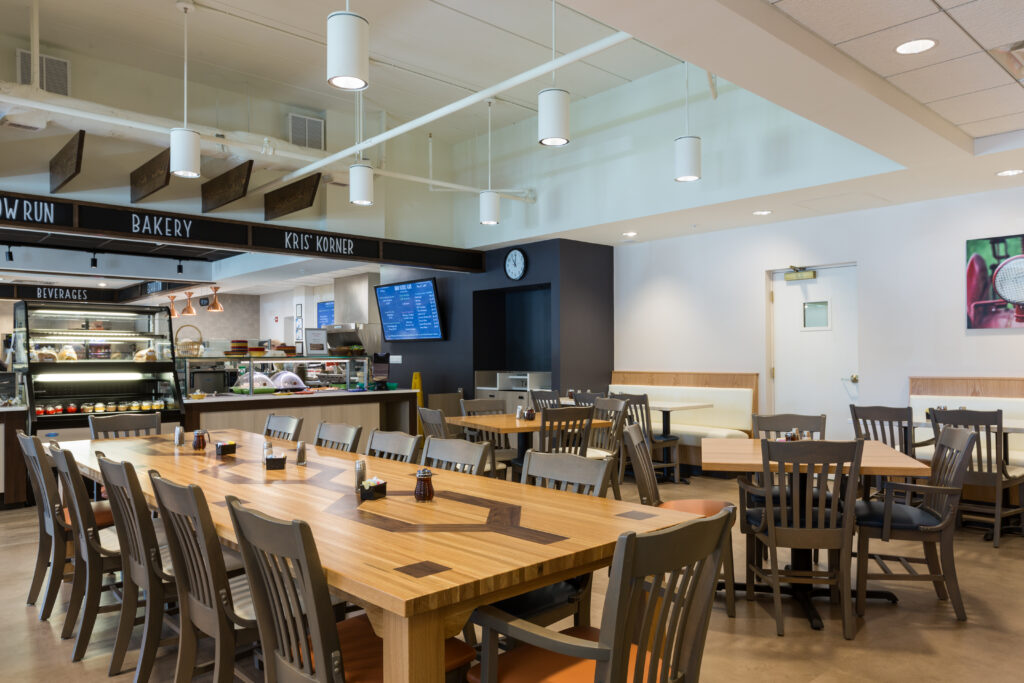
    Community Table at Park Gables

    One of the best examples of “nudge” architecture I can think of is called the Community Table. Virginia Mennonite Retirement Community renovated their café at Park Gables and among the various seating options is a large table that can easily seat 12 diners. The idea is to “nudge” people to eat together, hopefully having a conversation that would not happen at a table for two, thus enriching the meal, the day and therefore the life of the people that enjoyed each other’s company. There are other options. You have a choice. There are small tables and stools at a high counter. But this extra-large table is designed to nudge us into community, into interaction.  

    The concept of Choice Architecture reminds me of a quote from Winston Churchill. Speaking of England’s parliamentary chamber, he said, “We make our buildings and then our buildings make us.” Good design will affect the people that interact with it. Do you want your space to be a place where people choose to stay? Good design can nudge them to stick around. If you want your guests to feel welcome, good design can nudge them to be comfortable in a new place and realize you anticipated their arrival. Let us help you design a space that gives everyone a gentle nudge toward something better. 

    Welby Lehman
    Senior Project Leader | Architect

  • Three Better Ways to Select a Contractor – Negotiated Selection of Contractor

    Three Better Ways to Select a Contractor – Negotiated Selection of Contractor

    Several weeks ago, we introduced the idea that there are better ways to select a Contractor than to ask Contractors to submit bids at the end of the contract document phase. In previous posts, we discussed the pros and cons of design/build and Construction Manager as Constructor (CMc). We complete this series by discussing selecting a Contractor through negotiation.

    Unlike Design/Build and Construction Management, there is no industry-defined method or set model of contracts to define a negotiated selection of a Contractor. In fact, what type of contract to use should be part of the negotiation.

    Three Better Ways to Select a Contractor – Negotiated Selection of Contractor

    The primary reason to select a Contractor through negotiation is that the Owner has an established relationship with a Contractor. The Contractor may have built previous buildings for the Owner. Often this means the Owner trusts that the Contractor understands their expectations for cost, schedule, and quality. What remains is to determine what is the best contractual relationship between Owner, Contractor, and Architect.  Should it be design/build where the Architect works for the Owner? Should the Contractor function as Construction Manager, taking on preconstruction responsibilities for budget, schedule, and constructability reviews? A review of the pros and cons for each method described in our previous posts will provide guidance when addressing these questions.

    The other type of negotiated process occurs when the Owner does not have an existing relationship with a contractor, but still wants the contractor selected early in the project. Blueline has a process for this that provides the Owner with both quantitative and qualitative information for decision-making. Typically, we complete a conceptual design that includes a detailed floor plan, building elevations, 3-D views, a preliminary site plan and an outline narrative describing the materials, systems, and performance requirements of the building. This conceptual design package is then distributed to several (we recommend three, but no more than five) Contractors. Each Contractor is asked to provide the following information related to the conceptual design:

    • A non-binding conceptual budget for the design
    • A non-binding schedule for the project
    • A list of potential cost savings or areas where design decisions will have significant cost impact
    • Examples of similar projects the Contractor has completed
    • Three references from the Owner of similar projects
    • Demonstration of their ability to provide preconstruction budgeting and scheduling services

    In addition, we ask the Contractors to provide the following data:

    • A stipulated, binding fee for the work
    • A list of items they typically include as part of their general conditions
    • Their bonding rate and capacity. (Even if project does not need to be bonded it speaks to the volume, quality, and performance of company over time.)
    • Their cost for preconstruction services and the number of budgets and updates they are willing to provide.

    Based on these answers, one or more of the Contractors is brought in for a face-to-face interview. In this interview, the team can ask questions that shine a light on their project management style. Typical questions can include, but are not limited to:

    • What do you believe is critical to delivering a project on-time and on-budget?
    • How will you choose sub-contractors for this project?
    • How do you handle conflict among project team members?
    • What is distinctive about your company?

    This process can take four to six weeks, but if completed before detailed design work is started, can provide tremendous value to the Owner. When the Architect and Contractor work as a team for the good of the Owner, projects go from good to great. Let Blueline help you negotiate to find the right contractor for your project. Contact us at www.blueline.team.

    Randy Seitz 
    President | Client Service Leader | Architect
  • How Furniture And Signage Affect The User Experience

    How Furniture And Signage Affect The User Experience

    Imagine you have a brand-new space that you and your team have poured your hearts and souls into. The programming has been meticulously analyzed. The views have been optimized, and the finishes are in pristine condition.  You start imagining the growth and fellowship that is about to take place between these freshly painted walls. Then it hits you, while you know this new building like the back of your hand, will your visitors feel just as comfortable?  

    Most of us can agree that navigating a new space can create some anxiety. “Will I be able to get where I’m going?” Will I belong?” It is a designer’s job to help ease some of these anxieties and curate a positive experience for all visitors. Signage and furniture tend to be afterthoughts, but it is the furniture and signage that send the clearest message to the visitors of a space. Let’s look at what subconscious messages we are sending. 

    Signage – “We’ve been expecting you” 

    How Furniture And Signage Affect The User Experience

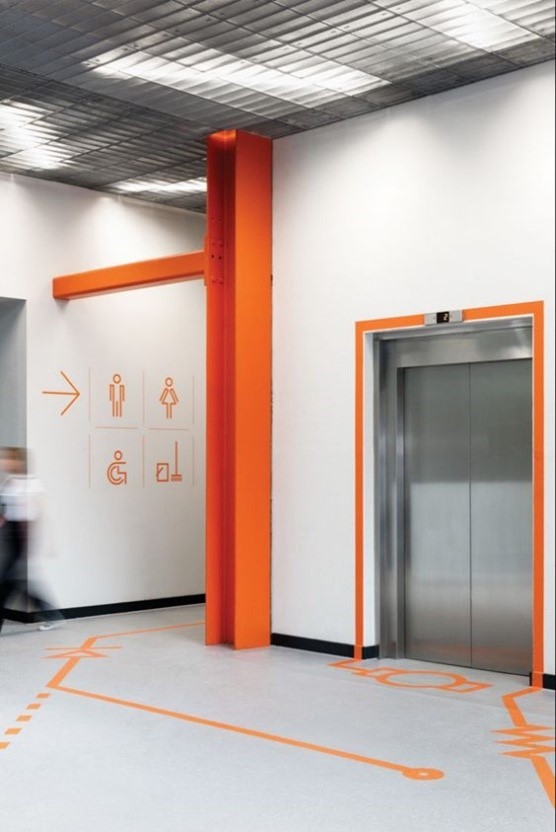
    When a complete signage package is integrated into the initial design of your space, not only does it create an overall cohesive look, but it also sends the message to visitors that this space was created with them in mind. It is important to remember that not all visitors have the same needs. You will have visitors of all ages and backgrounds that may not read a sign the same way. The use of pictures and color-coded wayfinding are a great universal way to guide people. Nothing creates more inclusivity than sending the message “We’ve been expecting you.” 

    Furniture- “We are here to meet your needs

    How Furniture And Signage Affect The User Experience

    Upon entering a space, visitors should quickly “feel” the type of space they are entering by the furniture arrangements. Imagine you have just walked into a 30’x30’ room. This room has a concrete floor, white walls, and is completely empty. You’re asking yourself, “What do you do in this space?” Most likely you’re looking around for visual cues on how to respond to your surroundings. Then, imagine you have walked into a 30’x30’ room with a concrete floor and white walls, only this time you see a cluster of café tables and stools all centered around a small barista station. The tables and chairs tell you this is a place to socialize, and the barista station tells you the function of the space.  

    We can continue to curate the experience by furnishing the space with a combination of table and chair styles. Bar height tables and low back stools encourage interaction between guests by placing seated guests and standing guests at eye level.  The low back stools allow for easy movement from left to right and from standing to sitting. By including a seating arrangement with dining height tables and higher backed chairs, you are inviting your guests to spend more time in the space. The variation in styles sends the message to guests that “we are here to meet your needs.”   

    Through thoughtful furniture arrangements and clear messaging, you are putting your visitors’ needs first, thus communicating a message of acceptance and hospitality. 

     
    Kristin LaPorta 
    Interior Designer | ASID | NCIDQ | LEED AP

  • Transitions – Portable to Permanent (Part 2)

    Transitions – Portable to Permanent (Part 2)

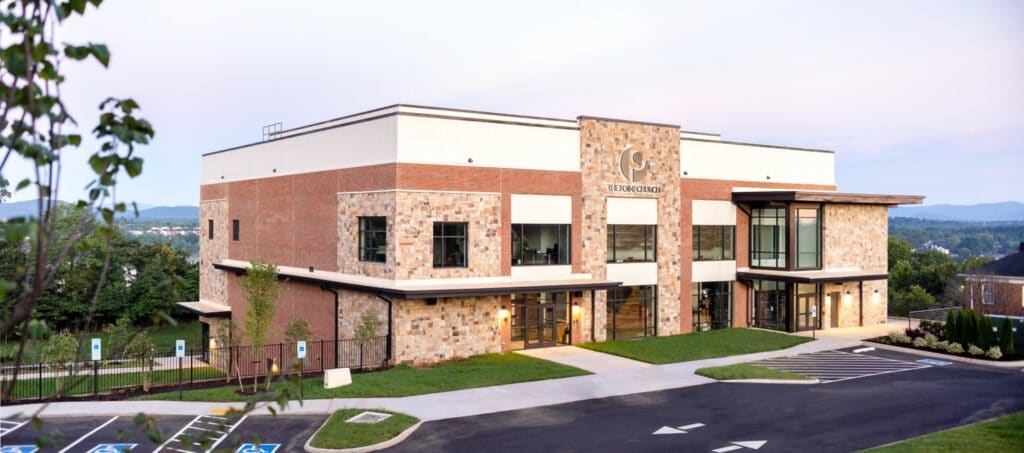
    This is the second part of a conversation I had with Jessie Wilson, Director of Operations for The Point Church in Charlottesville, VA, about their journey going from portable to permanent. After spending 10 years operating as a portable church, The Point acquired property and built from the ground up, opening their permanent home in September 2020. Part 1 covered their time being portable and the decision-making process to move toward a permanent home. In this post, we discuss life in their new facility.

    Transitions – Portable to Permanent (Part 2)

    You’re now in your new home.  Overall, how has the experience been?

    As somebody who has overseen operations for the church for the last six years, it’s a whole new world. It’s definitely a mind shift to go from thinking, “Alright, I’ve got two hours of set up, two hours of teardown, with two church services in between” to being able to direct most of your focus to the service itself.

    Even for our congregation, it feels like home; like we’ve arrived. And they have the sense that it’s our church–it’s not Monticello High School that we put our church into for a few hours on Sundays—it’s our church. So, it gives ownership to our people. It’s awesome. I don’t know any other way to say it other than it’s awesome.

    How has volunteering changed?

    There’s still some amount of set up and tear down, but it’s looks very different. It allows people to focus more energy on their specific gifts. 

    We now have a building to maintain which has allowed us to start a mentorship program where we pair older members that have certain gifts or skillsets with younger members.  For example, in setting up our Kidspoint environments, there was a great opportunity for the younger guys in our church to learn from our older members and get hands on experience in building furniture. Additionally, a Christ-based relationship is formed, where later on, the younger member can lean on the older one for advice in dealing with issues that may come up in their lives. This was a huge opportunity for our church body to have a great mentorship program where you don’t even realize you’re in a mentorship program. You’re just hanging out with the guys.

    Transitions – Portable to Permanent (Part 2)

    Have you had any unexpected benefits from having a permanent home?

    There have been a lot of things. I think the overall thing that I’ve been impressed by and have loved so much is the ownership that our church body has taken in it. 

    We’ve had a number of opportunities that having a permanent building has given us. For example, a couple of months ago, we teamed with local restaurants and fed twelve hundred meals to health care workers on a Wednesday night—the building allowed us to do that.

    Sometimes people will come and sit in the parking lot simply to enjoy the view.

    We’ve had people come to us asking for help, which we didn’t experience before because outside of Sunday mornings when our signs were out and visible, people didn’t know where to find us. Having a permanent facility has allowed us to become more of a fixture in the community. For instance, a couple of months ago there was a lady whose car broke down. Having seen the sign on our building, she knew that we were here, and we were able to help her. So, it just expanded our ministry to another level that we didn’t have before.

    What advice would you give another church that was considering a permanent home?

    Do it.  I think it’s a great move. It redirects the energy that you’re using on setup and teardown and the other aspects of being portable into other areas and allows you to expand your ministry in other places.

    Don’t build to accommodate your current attendance—always project for growth.

    Use the move as an opportunity to build off past experience while still maintaining your identity. As a portable church, we learned to be scrappy out of necessity, and I hope we never lose that. At the end of the day, we’re still The Point.

    Blueline has been honored to serve The Point and are excited to hear about the opportunities and positive outcomes that being in their new building has given them.

    Mike Wittig 
    Senior Project Leader | Architect