Author: a072c900_admin

  • Transitions – Portable to Permanent (Part 1)

    Transitions – Portable to Permanent (Part 1)

    It’s a natural progression for a young church.  After forming, one of the early needs is finding a place to meet that allows the church to minister to the community and hopefully grow.  Historically, schools have provided a nice fit, in that they’re usually empty on Sundays when a church would need them, they have rooms that lend themselves nicely to worship and children’s ministries and are a cost-effective way to allow a church to grow in a fiscally responsible manner. 

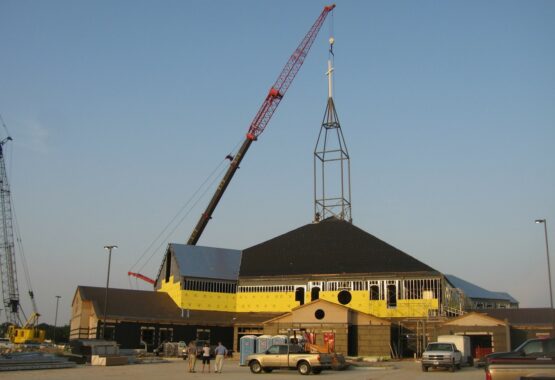
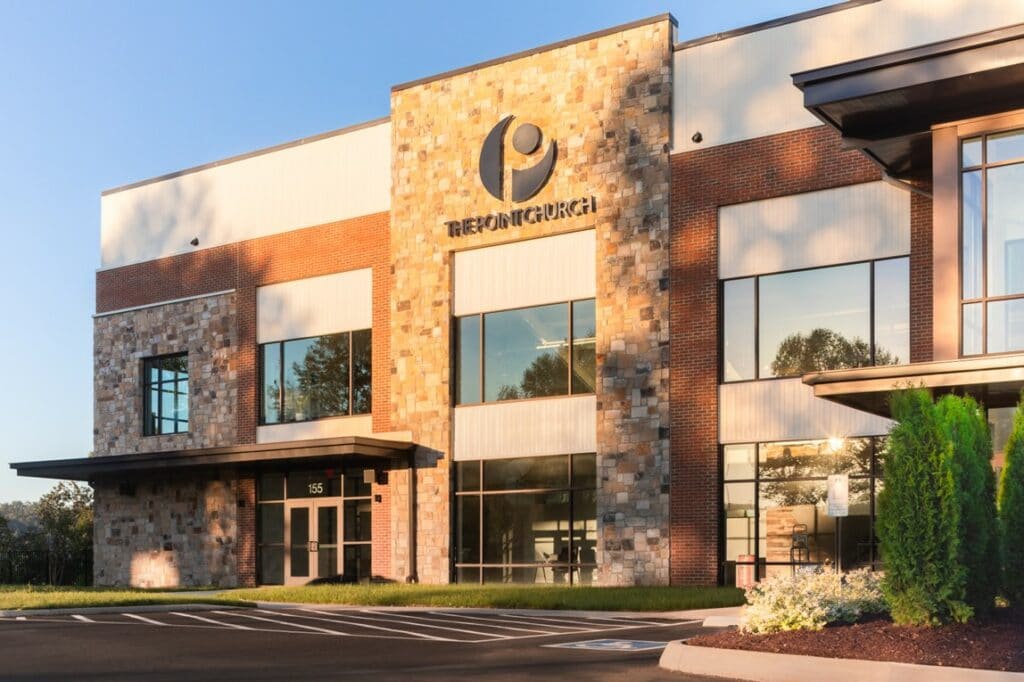
    Each church is different, but for most, the next logical step is to move on from the portable setup to a more permanent one – whether converting an existing building to a church or building new from the ground up. I recently spoke with Jessie Wilson – Director of Operations for The Point Church in Charlottesville, VA about their journey going from portable to permanent.  After spending 10 years operating as a portable church, The Point acquired property and built from the ground up, opening their permanent home in September 2020.

    Transitions - Portable to Permanent (Part 1)

    You’ve been in your new facility for nine months now.  After having a little time to reflect, when you look back, what is your overall perception of being portable.

    There were challenges.  Our venues were great to be in but having your 24/7 facility in five trailers Monday through Saturday didn’t allow for your equipment and belongings to last very long.  With constant packing and unpacking, things wore out…every week it seemed like we were replacing something. So, the list of complications in doing portable church could be long.  On a positive note, however, it also makes you scrappy—which is something that I hope we don’t lose going forward—and it made our volunteer teams a lot tighter than they would’ve been otherwise.

    With portable church relying so heavily on volunteers, was it difficult to maintain enthusiasm?

    One of the things that is very important to us is that you serve using the gift(s) that God has given you. Now, your gift can be in setup and teardown where you use your hands, and that’s how you serve the church.  However, what we noticed while portable was that people who were gifted in other areas (like kid’s ministry) were helping with setup and teardown out of a sense of obligation, which could lead to burnout at times.

    Being permanent (with less need for setup/teardown) has allowed our church body to dive deeper and serve using their specifics gifts instead of serving in other areas out of a sense of obligation because they knew that somebody had to do it.

    Transitions - Portable to Permanent (Part 1)

    After a while, did you begin to get questions from within your congregation about whether a permanent home was part of the future?

    No, from the very beginning, we’ve always known that we were aiming for a 24/7 facility, and constantly casted that vision to the congregation to keep those questions from arising.  We didn’t always know what it looked like, but the messaging was maintained from day one.

    How was the decision made to pursue a permanent home?  What drove the timing?

    It wasn’t like we waited and said at the 10 year point we’re going to build our first 24/7 facility… From day one, leadership started looking for a permanent home, with the goal of moving in as soon as we found the right place.  As we grew, we knew we needed to speed up the process. We looked at a lot of storefronts and a lot of different properties, but the Lord shut the door multiple times. 

    Meanwhile, growth continued to occur to the point that we were literally bleeding into the hallways, setting up kid’s environments because we were growing faster than the space would allow. We considered starting a third service because we were filling the auditorium to max capacity on both services every single Sunday.

    Finally, the right opportunity opened up and we pursued it.  Looking back, the timing and the growth went along with each other, but I would say the timing was on the Lord.

    In our next post, we’ll discuss life in a permanent facility, opportunities that have been opened for them, and some of the unexpected benefits they’ve experienced since being in their new home.

    Mike Wittig
    Senior Project Leader | Architect
     

  • Three Better Ways to Select a Contractor – Construction Manager as Constructor

    Three Better Ways to Select a Contractor – Construction Manager as Constructor

    Several weeks ago, we introduced the idea that there are better ways to select a contractor than to ask contractors to submit bids at the end of the contract documents phase. In a subsequent post, we discussed the pros and cons of design/build. Today we look at a project delivery method known as Construction Manager as Constructor (CMc).

    In this method, an owner hires both the architect and the CMc at the start of the project. If the architect is hired first, they can assist the owner in interviewing, evaluating, and selecting a construction manager.  The reverse can happen as well – an owner hires a CMc, and they assist in hiring the architect. In either case, each company has a separate contract with the owner.

    Three Better Ways to Select a Contractor – Construction Manager as Constructor

    The American Institute of Architects (AIA) contract language[1] places responsibility for establishing the project budget and schedule with the CMc. As the architect develops design concepts and produces the contract documents, the CMc provides estimates and ideas for modifying the design to stay on budget.  The CMc also advises on issues of constructability – which are the best materials and systems to use given the projects, program, budget, site, and schedule.

    Once the design is done, the CMc prepares a guaranteed maximum price (GMP) which is the contractual cost of the building.

    Pros:

    • The construction manager’s knowledge of the most economical materials and systems is available from the start of the project.
    • Creates a collaborative ethos between construction manager, architect, and owner.
    • The construction manager can leverage relationships with sub-contractors to provide additional information regarding cost, schedule, and constructability.
    • Can facilitate fast-tracking projects.
    • Guaranteed Maximum Price format is open book, allowing for owner input on sub-contractors.
    • The owner has direct access to architect and their consultants throughout both design, and construction phases.
    • Cost-creep throughout construction is minimized.

    Cons:

    • Execution of a project under a GMP requires more record-keeping and information management.
    • Construction management works best on larger projects.
    • The construction management firms need to have dedicated pre-construction staff with skills in estimating, scheduling, and constructability reviews.
    • This method of project delivery does not typically save money on fees.

    If you want the expertise of a contractor as part of your project team from the start, let Blueline help you find and select the right construction manager.


    [1] You can learn more about the actual AIA agreement at https://www.aiacontracts.org/contract-documents/6232027-owner-construction-manager-as-constructor-agreement

  • Three Better Ways to Select a Contractor – Design/Build

    Three Better Ways to Select a Contractor – Design/Build

    In our previous blog, we gave a brief introduction to what Blueline believes are three better ways to select a contractor. In this post, we look more closely at Design/Build.

    This method has gained prominence over the past 40 years to the point where over 40% of all non-residential building project are done design-build. In this method, the owner hires the contractor first and makes them responsible for both the design and construction. Some contractors have architects and engineers on staff, others hire an architect just as they would hire another sub-contractor.

    Three Better Ways to Select a Contractor – Design/Build

    Pros:

    • One point of accountability for a successful outcome.
    • Fully take advantage of contractor’s knowledge of most economical materials and systems.
    • Contractor often has relationships with major sub-contractors who can also provide design expertise.
    • Eliminates redundant project management between contractors, architects and engineers reducing amount of project costs that go to design fees.
    • Can work around disruptions in the supply chain, increasing likelihood that the building is done on time.
    • Can better facilitate fast-tracking of projects.

    Cons:

    • Range of solutions often limited to materials, systems with which the contractor has the most experience with and sub-contractors with whom they have the best relationship.
    • Typically, the project is not “open-book.” Owner does not know how project cost is determined or have any say in which sub-contractors are used on the project.
    • Focus is on building first-cost (the initial cost of construction). Most contractors do not have the tools to help the owner evaluate long term cost of ownership.
    • Architects and engineers typically have limited involvement in the construction phase to monitor quality of workmanship and help avoid problems.
    • This method works best when there is a single person making decisions for the owner. Projects led by committees often require more options, input, and decision-making time, all of which can offset the efficiencies of design/build.

    Blueline has been part of numerous design/build teams.  If a contractor has a track record for successful project delivery and exceptional customer service, we don’t mind working for them. The best design/build teams include the architect in the early design process and provide them with an opportunity to interact with the client and hear their needs and expectations directly. Finally, a contractor who has demonstrated expertise with your type of project will better tailor the design/build process to your needs.

    Please contact us if you would like to discuss what type of contractor selection is right for your project.

  • Three Better Ways to Select a Contractor

    Three Better Ways to Select a Contractor

    How and when you select a contractor is a critical part of minimizing the risk of a construction project.  Ever-increasing costs and regulations combined with technology and building systems’ complexity make selecting the right contractor critical. The right contractor, teamed with the right architect, is essential to ensure you get the building you want, on-time, and on-budget.

    Traditionally, an owner would hire an architect who would oversee the entire design process resulting in a set of contract documents. The owner would invest months working with the architect, investing tens of thousands of dollars in fees. The contract documents would then be given to three or more contractors who would study the documents and submit a bid. Typically, the contractor with the lowest bid wins.

    We’ll leave it to the reader to Google why the “design-bid-build” system of contractor selection often results in projects that cost too much and aren’t completed on time.

    Three Better Ways to Select a Contractor

    At Blueline, we are advocates of selecting the contractor as early in the project as possible. Here are three better ways to select a contractor:

    1. Design/Build – This method has gained prominence over the past 40 years to the point where over 40% of all non-residential building projects are done design-build. The owner hires the contractor first and makes them responsible for both the design and construction. Some contractors have architects and engineers on staff, and others hire an architect just as they would hire another sub-contractor.

    Blueline has been part of numerous design/build teams. If a contractor has a track record for successful project delivery and exceptional customer service, we don’t mind working for them.  The best design/build teams include the architect in the early design process and provide them with an opportunity to interact with the client and hear their needs and expectations directly. A contractor who has demonstrated expertise with your type of project will better tailor the design/build process to your needs.

    2. Construction Management at Risk – This method essentially hires both the architect and contractor at the start of the project. Sometimes the contractor is selected first and helps the owner interview and select an architect; sometimes, it’s the other way around. In either case, the architect and owner have separate contracts with the owner.

    This method’s key feature is that throughout the design process, the contractor is responsible for producing budgets and schedules based on the architect’s design work. The contractor can also advise on the availability of material and the constructability of the proposed scheme. The architect then adapts the design so that the design, budget, and schedule align with the owner’s expectations.

    3. Negotiated Selection — In this scenario, the owner hires the architect to develop a conceptual design. The architect develops a building program that meets the owner’s functional needs then develops plans and 3D views that illustrate design intent. The final conceptual design package should include an outline specification of materials and systems. 

    The conceptual design package is then given to three to five contractors who are asked to provide a non-binding budget and stipulate a proposed fee. Interviews are then conducted where the contractor is typically asked to suggest ways to save money, manage the project, minimize changes, etc. The contractor best aligned with the owner’s goals and expectations is selected to advise on cost, schedule, and constructability throughout the remainder of the design process.

    Like the Construction Manager at Risk method, the architect and contractor have separate agreements with the owner.

    We’ll elaborate on each of the methods more in subsequent blogs. We’ll provide pros and cons and keys to success based on our extensive experience with each method.

    There is no one best way. The right way to select a contractor depends on the type of project, how well the owner knows what they need to build, and their expectations for quality, price, and schedule.

    In the meantime, if you are looking to hire a contractor and want to discuss your unique situation, contact us through our website.

  • Clarity Not Certainty

    Clarity Not Certainty

    During a recent phone call, my good friend Pat Kase, Senior Project Developer with Aspen Group, said, “What our clients are looking for is clarity, not certainty.” Pat’s gift for insight is matched only by his deft alliteration. His words did echo what Blueline is hearing from clients as they discern whether to undertake building projects.

    The pandemic has brought clarity.  It has forced churches, schools, and businesses to focus on what is of value to their constituents and to discard everything that is not. COVID has been called “The Great Accelerator” – bringing rapid growth to that which is good and the need for swift cancellation to that which is not. Organizations that recognized the difference and responded quickly continue to thrive. For a donor-funded organization such as churches and private schools, this has been particularly true.

    Clarity Not Certainty

    But the past 12 months have also tested our assumptions about the future. For those of us who love a good 5-year plan and get a racing pulse while “visioning,” the pandemic has brought humility and uncertainty. At best, strategic plans need significant recalibration. At worst, your strategic plan is in the trash can, and you are staring at a blank piece of paper.

    So, if your church, school, or business does indeed have clarity, here are several things to keep in mind as you align your facilities with your mission and purpose:

    1. Keep your options open. Even if you are building or renovating to address an immediate need, make sure you do not do something that limits future options. Master planning is good, but an hour planning session with Blueline can help you analyze traffic, utilities, pedestrian patterns, storm-water management, and topography enough to make sure you are not building yourself into a box. Choose clear-span building systems and minimize load-bearing walls. Stack and gang plumbing and use HVAC systems that do not require large duct runs. In many cases, common sense and experience can help you make near-term improvements without limiting growth.
    2. Move quickly. Chris Weaver, President and CEO of Lantz Construction Company, says that the market for materials and labor “feels like the wild west.” Over the past decade, construction costs have risen by 50%. Inflation is hovering around 4% and is likely to go up a point the next year. Interest rates are still relatively low, but we have not met a business leader who expects them to stay low. If you are undertaking a project to meet current needs, you logically want to address them as soon as possible. Blueline understands that when a client says, “Go!” we need to have a plan and move fast.
    3. More donations, less debt. With uncertainty about the future, most organizations have a relatively short planning horizon. Understandably, this means clients do not want to take on long-term debt. The good news is that many of our church and Christian School clients are seeing stable income. The care, hard work, and creativity they have put into serving their congregations and constituents mean there is a reservoir of goodwill. That goodwill can translate into strong giving for projects that are vital to the continued fulfillment of the organization’s mission and purpose. Blueline can generate the data and renderings your church or school needs to make its case for support

    Blueline remains ready to equip your facilities so that they amplify your mission. Whether your project is big or small, we will match your clarity with our experience and understanding.

  • An Ancient Faith for a Modern World

    An Ancient Faith for a Modern World

    After 10 years of serving as a priest in an established Coptic Orthodox Church in Northern Virginia, Father Anthony Messeh felt a strong call to start a church that invited people from all backgrounds to join the rich spiritual legacy of the Coptic church. Father Anthony shared his call with his senior priest, then the bishop, and ultimately received the Coptic Orthodox Pope of Alexandria’s approval and blessing on December 11, 2011. In 2012 St. Timothy and St. Athanasius (STSA) Church was launched.

    Many churches intertwine spiritual and cultural practices and traditions. Father Anthony believes that “The church should have no one culture above another.” De-emphasizing the ethnic and cultural elements of the Coptic Orthodox Church frees others to join in and be blessed by a faith that Father Anthony calls “the best-kept secret.” In a region like Northern Virginia, this makes it easier for persons of Egyptian heritage to invite their spouses, friends, and neighbors who come from other ethnic and cultural backgrounds.

    A key part of this strategy is a second service each Sunday called “The Well.” After the traditional liturgy each Sunday, the congregation pauses to “break fast” together (Coptic Orthodox Christians fast for at least 9 hours before taking communion each Sunday). They then reconvene for a time of worship with contemporary music and a sermon from Father Anthony. Some who are new to the Coptic church learn to know the community by attending these hour-long services. You can check out Father Anthony’s sermons from “The Well” on STSA’s YouTube channel.

    Father Anthony also started STSA Ministries to provide resources and encouragement to Orthodox leaders in other parts of North America who are also trying to bring an ancient faith to their modern world.

    An Ancient Faith for a Modern World

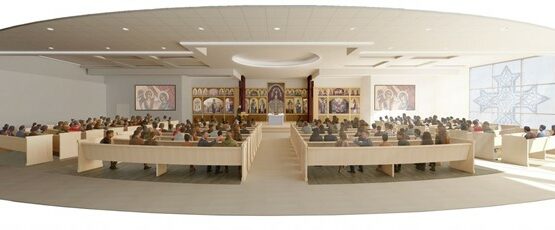
    Currently, STSA Church meets in rented facilities in Arlington, Virginia. Blueline designed a new church building for STSA that has both a traditional Orthodox sanctuary and a contemporary “black box” auditorium with the capability to broadcast services to other locations. The facility also includes Sunday School classrooms, offices, a kitchen, and a roof-top gathering area. The church is anxious to move into its facility in early 2022.

    “Having a permanent place of worship is vital to authentic Orthodox worship,” says Father Anthony. From the iconostasis to vestments to the use of incense and Holy Communion elements, the liturgy is full of symbols and stimulation for the senses, all aimed at celebrating the glory, power, and mystery of Jesus Christ. The contemporary worship venue will allow the church to live-stream to other locations. Orthodox Churches throughout North America can log into “The Well” service after their local liturgy. STSA also plans to host conferences and make their space available to other groups for meetings and celebrations.

    When I asked Father Anthony what this ancient faith has to offer our modern world, he quickly responded, “Our ancient faith has solutions to all the problems of this world.” Father Anthony goes on to explain that we live in a world of unknowns, with lots of questions people cannot answer. Each Sunday, the liturgy celebrates a God who is both unknowable and mysterious yet has not left us alone. It recounts the Good News of God’s saving act in the death and resurrection of Jesus Christ and His abiding presence in the Holy Spirit. And the liturgy tells the stories of Saints through the ages who bear witness to a God that sustains us in a troubled world.

    Blueline is grateful and honored to serve STSA and deliver a building that amplifies their mission to bring an Ancient Faith to a Modern World.

  • The Church Kitchen

    The Church Kitchen

    One of our clients has a sign posted in their foyer near where they serve coffee that says, “It’s not a meeting if there is no eating.”  For many churches, food is the fuel of fellowship. Of the many things we miss in the age of COVID-19, sharing a cup of coffee or a meal together, at church, is near the top of the list.

    Planning for how and where we serve food in our church buildings can be a challenging part of the overall design process. First, kitchens are expensive. They have a high concentration of utilities – plumbing, gas, HVAC – which makes the cost per square foot up to 50% higher than other areas of the church. Depending on capacity and quality, kitchen equipment can be a significant part of a project budget.  In addition, building codes continue to roll out more and more measures to protect the health and safety of those who prepare, serve, and consume food in a church building. These technical factors combined with the passion many of us have for food and fellowship can make finding the right balance of capacity, functionality and cost difficult.

    Twenty years of experience equips Blueline to help churches get the most out of their kitchens. Here are some lessons learned that can bring clarity to designing your food service areas:

    “Commercial” vs. “Warming” — Churches usually describe the type of kitchen they want in one of these two terms.  A commercial kitchen allows a church to cook food that generates grease, requiring a hood over any cooking surface or oven. This hood must have its own exhaust as well as make-up air.  Production kitchens also need 3-compartment sinks connected to a grease interceptor with water at 140 degrees. Dishwashers must be high-temperature or use chemical sanitation.  Food prepared for commercial purposes, including fundraising, trigger building code requirements that, in turn, require commercial grade equipment and construction.

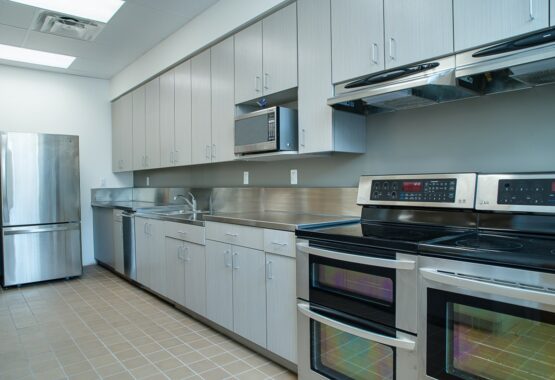
    Warming kitchens typically employ residential-grade appliances. Food activities include warming items in a microwave, crockpot, range, or stove.  Large, commercial grade convection ovens can typically be used for warming bread, pastries, etc. as long the reheating does not generate grease. Typically, we specify ample outlets and counter space for people to bring crockpots and provide multiple microwaves. A warming kitchen can also be a place for caterers to set up for an event that is being catered.

    Building Codes vs. Health Department — The building code may be different than the requirements of your local health department. Churches are typically exempt from Health Department certification and inspections unless they are running a daycare or pre-school.

    Flexibility — when the budget allows, utilizing stainless steel tables, shelving, and racks, rather than building permanent cabinets and countertops, allows for easier reconfiguration as use of the kitchen changes over time. Having some of the tables and shelving on castors allows groups to change the set up depending on the type of preparation need.

    Workflow — There are time-tested ways for optimizing how people preparing and serving food move around the kitchen. It begins with a one-way flow with separate doors for entering and exiting the kitchen. The chart below shows a basic circulation diagram.

    The Church Kitchen

    Other specialties that may be included in the kitchen are coffee production areas where large quantities of coffee are brewed and distributed to coffee service areas throughout the church. Churches that celebrate the Eucharist each Sunday often need a place to prepare the elements and store the trays, cups and platters associated with this sacrament. (This assumes there is no Sacristy.)

    Also, do not forget the trash. Try to minimize the distance trash needs to be carried from the kitchen to dumpsters or outside trash cans. Recyclable materials – glass, plastic, cardboard, and compost – can take up a good deal of space. If carts are used for moving prepared food and/or dirty dishes, a space may be needed to wash the carts.

    The Church Kitchen

    Size — A 20’ by 30’ (600 square feet) kitchen is ample size for a warming kitchen that serves several hundred people. A room this size can have worksurfaces and equipment around the perimeter with area for a 4’ wide by 10’ long island in the middle. A 15’ x 10’ room can accommodate storage of serving areas, dry goods, and bulk food items. The same footprint can work for a production kitchen depending on the amount of equipment and people working at one time.

    Serving Windows — Some churches use serving windows for setting out food. This limits food service to one line.  Serving from tables outside the kitchen allows two (or more) lines. It also frees up walls space in the kitchen for cabinets and shelving. Serving windows can be tricky to deal with if the kitchen must be enclosed with a fire-rated wall. Finally, eliminating the service window means there is no messy view from the dining/ fellowship area into the kitchen.

    Kitchens are complex and expensive. Additionally, no two projects are alike. These are but a few of the many details Blueline can guide you through to discover the kitchen that best amplifies your hospitality ministry.

     
  • Comprehensible, Not Comfortable—Part 2

    Comprehensible, Not Comfortable—Part 2

    There was a time when every surface, window, and piece of furniture in our church
    buildings told the story of Jesus and the Gospel. Every design choice was meant to inspire
    awe and reverence as well as educate. As literacy grew amongst Christians, and the Gospel leaped from the printed page to radio, then to television and now the internet, the need for our buildings to stir devotion and teach truth receded.

    Many churches now rely on technology – video, internet, social media, etc. – to share the Good News and grow disciples. Music is the primary medium for emotional engagement. Few symbols other than the cross are deployed to reinforce the history of the Church. As one audio/video/lighting contractor once told me, “I’ll design the technology, you wrap a box around it.”

    But as described in a previous blog, “Comprehensible, not Comfortable, Part 1,” the pendulum is swinging back from utilitarian church design to a mode that recognizes that symbols and art have value in the places where the Church meets, worships and serves. It is the difference between conveying information and inspiring people to ponder and confront a God who is both in our midst and transcendent. It does not negate the need for functionality, but rather amplifies it.

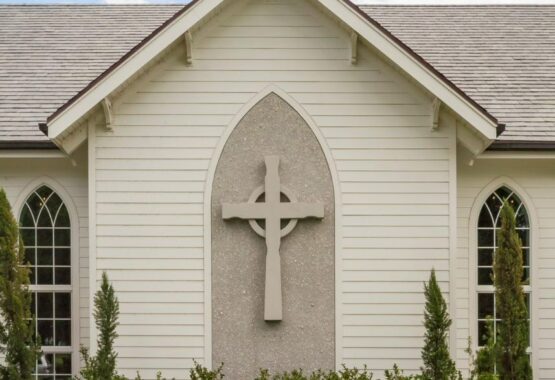
    Both symbols and art can catch the attention of the seeker and convey not just information but also meaning. The Cross is the most recognizable symbol in a church building. The form of the cross often speaks to the history and tradition of a particular community of faith.

    The baptistry, whether font, fountain, or pool, reinforces both the universal importance of this rite, and the diverse expression and history of this sacrament.

    Comprehensible, Not Comfortable—Part 2

    Other symbols like a winged lion, an eagle or keys can represent various apostles and saints. Stations of the cross are typical in Catholic churches. The icons of Orthodox traditions are yet another expression of the power of symbols to convey meaning.

    Comprehensible, Not Comfortable—Part 2

    It is no coincidence that faith traditions that value symbols, typically also want them to be
    well-crafted and beautifully made.

    The art of music is a component of almost all churches. Painting, sculpture, glasswork also have historical significance and are experiencing a revival in our church buildings. Historically art has represented specific scenes and stories in church history. Today, the exhibition of abstract art invites specific groups of un- and de-churched people to enter church grounds and view it amid other explicitly Christian symbols. Such art can also connect the church to its geographic or demographic context.

    What ties them together is beauty. As Aubrey Spears, Rector of The Church of the Incarnation in Harrisonburg, Virginia says, “Beauty is the ambassador of Truth.” Beauty opens the door to transcendence and mystery. Beauty creates moments in which we, members of the body of Christ can engage the seeker. While technology can stir emotions and effectively communicate information, we need art to generate the lingering awe and reverence in which meaning is conveyed and in which truth sinks its deep roots.

  • Social Distancing: Upholstery and Lighting

    Social Distancing: Upholstery and Lighting

    Social Distancing: Upholstery and Lighting

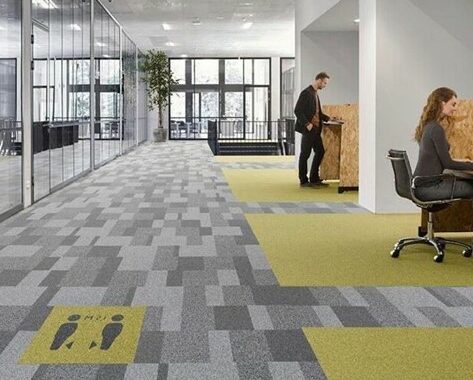
    Soft surfaces may harbor bacteria longer due to their difficulty cleaning. However, new fabrics and fabrication techniques incorporate anti-microbial agents which can help keep your space cleaner and safer. You can also use color to indicate social distancing by using different color fabrics to create smaller groupings of furniture strategically placed throughout a space.

    Another area of your space to consider is the ceiling. Armstrong offers “Clean Room” ceiling tiles which are anti-microbial and washable; and Pinnacle Lighting offers “Indigo Clean” light fixtures with bacteria-killing agents. These products can be easily retrofitted into an existing ceiling grid.